When you get paper in bulk for businesses, you can’t just judge the true value directly by looking at its feel or surface. This is where paper quality testing becomes highly essential. Whether you’re taking paper for printing, packaging or industrial use, understanding the chemical and physical properties of paper will ensure that the paper can work well for specified applications. Proper quality testing can directly affect regulatory compliance, product performance, and guaranteeing towards batch to batch consistency.
Without that, businesses can risk machine jams, damaged goods, and poor print results. For this comprehensive guide, we can break down these paper quality parameters every buyer should know. You can learn about paper quality testing, that is, why this matters for different industries, the basic parameters for checking, and how to evaluate the paper for making that bulk purchase. By the end, you will get to understand the market value and value for money for procurement decisions.
What Is Paper Quality Testing?
Definition and Purpose
For paper quality testing is a systematic process for measuring the mechanical, physical and optical properties of paperboard. The basic yet main purpose is to verify that the paper can meet the required paper specifications for the intended use. This removes the guesswork for the buying process plus replaces the measurable and hard data.
Why Manufacturers and Buyers Rely on Testing
Manufacturers that are testing towards ensuring that production capacities and lines are running at their best and producing uniform rolls or sheets. Buyers, on the other part rely on some test reports to verify that the supplier is delivering what’s promised under the contract. This builds transparency and trust for both parties.
Contributing to Consistent Product Quality
Regular testing can help identify minor deviations in the manufacturing process that can lead to major defects. Through monitoring these types of metrics, thus ensuring that each batch is delivered to the buyer based on the same reliable performance as the previous one.
Why Paper Quality Testing Matters Across Industries
Product Performance
Each paper product has some specific job to do. Packaging paper must hold up heavy weights without breaking, and printing paper must absorb the ink evenly without smudging. The testing can ensure that the paper has the basic strength plus the surface properties for performing the intended function flawlessly in real-world conditions.
Quality Consistency
For large-scale manufacturing, even just a basic variation in paper quality can create major disruptions. Through the consistency of paper quality inspections, this ensures that each roll or ream behaves exactly the way for high-speed printing presses or those packaging machines, thus preventing material wastage or unexpected downtimes.
Regulatory Compliance
Most of the industries have strict safety and legal norms. For instance, the paper used for food packaging needs to meet chemical and hygiene safety norms. Testing it ensures that paper complies with the basic regulations, protecting businesses from recalls or legal penalties.
Customer Satisfaction
Lastly, the raw material quality directly reflects the final product. This has to be printed in the brochure, and it can fade quickly, or if the cardboard boxes collapse during the delivery process, the end consumer will not be satisfied. With rigorous testing, this guarantees a premium final product, thus leading to repeat business and higher customer trust.
Cost Reduction Through Quality Control
Catching quality issues during the procurement stage is much cheaper than dealing with them later. Any type of poor-quality material can cause high rejection rates, machine breakdowns, and wasted adhesive or ink. Investment done for proper paper quality testing generally saves significantly by reducing those hidden operational costs.
Common Paper Quality Parameters
For making informed decisions, buyers should understand the paper quality metrics. Here’s the basic explanation of that:
GSM
GSM generally stands for Grams Per Square Meter. This is measured by the density and weight of the paper. A high GSM value means a sturdier and thicker paper, while a low GSM value shows flexible and lighter paper. This is the basic parameter for classification of paper types.
Thickness (Calliper)
Calliper measurement is based on the actual physical thickness for a single sheet of paper, which is expressed in either millimetres or microns. While this is related to GSM, calliper determines the feel of paper or “bulk” this is important for business cards, premium packaging, or book covers.
Burst Strength
The burst strength measures the ability of paper to resist rupturing without any pressure that’s applied uniformly for the surface. This is majorly an important metric for packaging materials or corrugated boxes that can withstand stacking, external pressure or handling during the delivery/transit process.
Tensile Strength
This value indicates how much stretching and pulling force the paper can withstand before it breaks. This is important for papers that can be used for high-speed printing processes, where the roll of paper is undergoing constant stress.
Tear Resistance
The tear resistance measures how the paper resists tearing once a small cut or nick, has been made. Higher tear resistance is important for sacks, bags or wrapping papers that have to face rough handling and friction during heavy use.
Cobb Value
The Cobb value helps in measuring the water absorption capacity of paper over a specified period of time. This is important for a humid country like India; a paper with a lower Cobb value is generally preferred, meaning it will resist any kind of moisture, thus preventing boxes from losing their shape or becoming soft.
Brightness
The brightness value tells how much blue light can be reflected from the surface of paper. A higher level of brightness indicates that the text and printed color will appear sharp and vibrant on that paper. This is a major parameter important for high-quality brochures, premium office stationery, or magazines.
Opacity
Opacity value helps in measuring how much light can pass through that paper. Higher opacity is great for double-sided printing, as this prevents images or text from showing through on the other side (known as the “show through”), ensuring a professional and clean finish.
Moisture Content
The moisture content defines the right percentage value of the water present. Maintaining the optimal moisture content (usually around 4 to 6%) is important. High moisture content can cause paper to jam or curl inside the machines, while too little can make it brittle and further prone to static electricity.
Common Paper Testing Methods
- Burst Strength Test: Under hydraulic pressure, a rubber diaphragm is expanded against paper until it bursts. The main purpose of this test is to determine the right amount or pressure that the paper can withstand.
- Tensile Testing: The paper strip is pulled from both ends through a machine until the paper snaps. The machine actually evaluates the breaking point and the paper’s elasticity, thus ensuring that it can survive high-speed operations.
- Cobb Test: A specific area for the paper to be exposed to water for the set time (e.g., 60 seconds), and the weight that’s gained by the paper is measured. The purpose here is to verify the sizing of paper and humidity resistance.
- Optical Testing (Brightness and Opacity): Special spectrophotometers that shine light on paper and measure the transmission and reflection. This ensures the paper meets the visual standards required for high-quality printing.
- Moisture Testing: Electrical or infrared resistance that meters that are quickly check the water content that’s in paper. The purpose of this test is to check whether the paper has stability or not and will not cause warping or static issues under the buyer’s facility.
Paper Quality Standards and Certifications
ISO Standards: To be sure the mill has regular procedures, try to find ISO 9001 (Quality Management Systems). In the effort to make sure that color and printability standards are fulfilled, ISO 12647 is also relevant for printing paper.
Food-Contact Compliance: The supplier must guarantee that paper is without harmful substances if you are buying paper for packaging for food (such as cups, plates, or wrappers). While foreign buyers can ask for FDA or EU approval, FSSAI compliance is necessary in India.
BIS Standards: The BIS, or Bureau of Indian Standards, provides IS codes for multiple paper grades (like the IS 10256 for printing paper). A basic BIS-certified mill can guarantee that the paper meets national benchmarks.
Mill Quality Procedures: Some reputable manufacturers like the Sri Krishna Paper Mills maintain the highest quality control labs that test each and every batch before it gets dispatched, thus providing the COA or Certificate of Analysis with every order.
How Buyers Can Evaluate Paper Quality Before Procurement
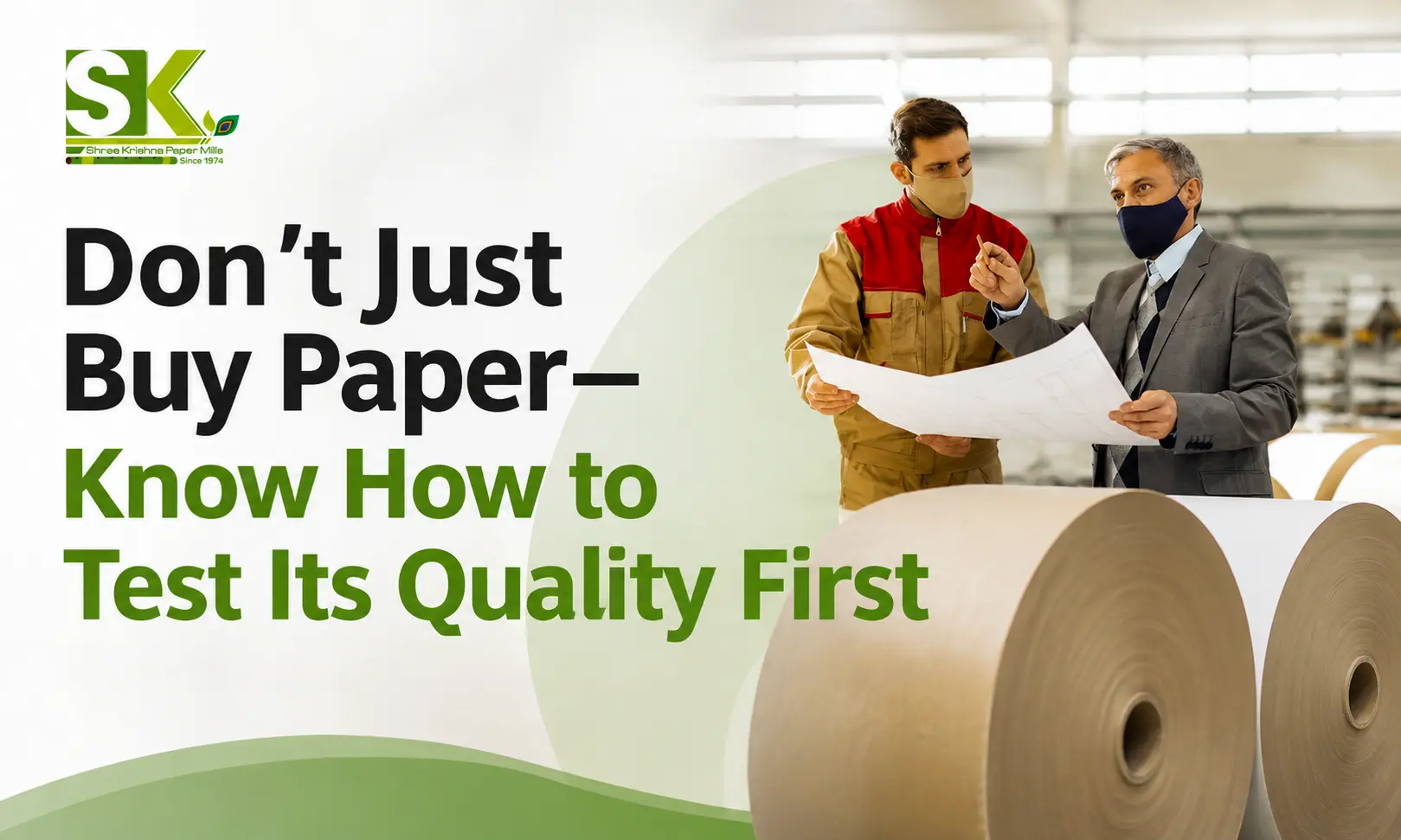
Do not rely just on the supplier’s word. As the smart buyer, you need to understand the conduct before finalising the offer. Using the practical checklists for evaluation of potential purchase:
Pre-Procurement Paper Quality Checklist:
- Request a Mill Test Certificate (MTC): Ask the supplier for the last report that can match your batch.
- Verify the paper specifications: cross-check the GSM, brightness, and calliper that’s mentioned for the quote through your physical requirements.
- Ask for Physical Samples: Evaluate the physical sample for committing the bulk order.
- Conduct the Trial Run: Run a basic or small quantity of paper for the packaging or printing machine to check for jams, ink absorption, and finishing.
- Check for Certifications: Ensure that the supplier has valid BIS and ISO certifications for food-grade products that are relevant to the industry.
- Inspect Packaging: Ensure the paper is wrapped for moisture resistance, plus tear-proof packaging and the Indian weather conditions.
- Review the Return Policies: Confirm the supplier policy for replacing the batches for failing the quality checks.
Conclusion
Understanding paper quality testing is much more than just a technical requirement; this is a major business strategy. Through familiarising yourself with the essential paper quality parameters like the burst strength, GSM or Cobb value, plus the moisture strength, you can easily protect your business from customer complaints and costly production errors.
Just insist on transparent paper specifications, verify the paper testing standards, and also conduct paper quality inspection before you procure it. Remember, the cheapest paper on the market is often expensive in the long run and fails in production. Partner with a reputed, certified paper supplier that values as much as you do, and ensure that business operations work efficiently and smoothly.