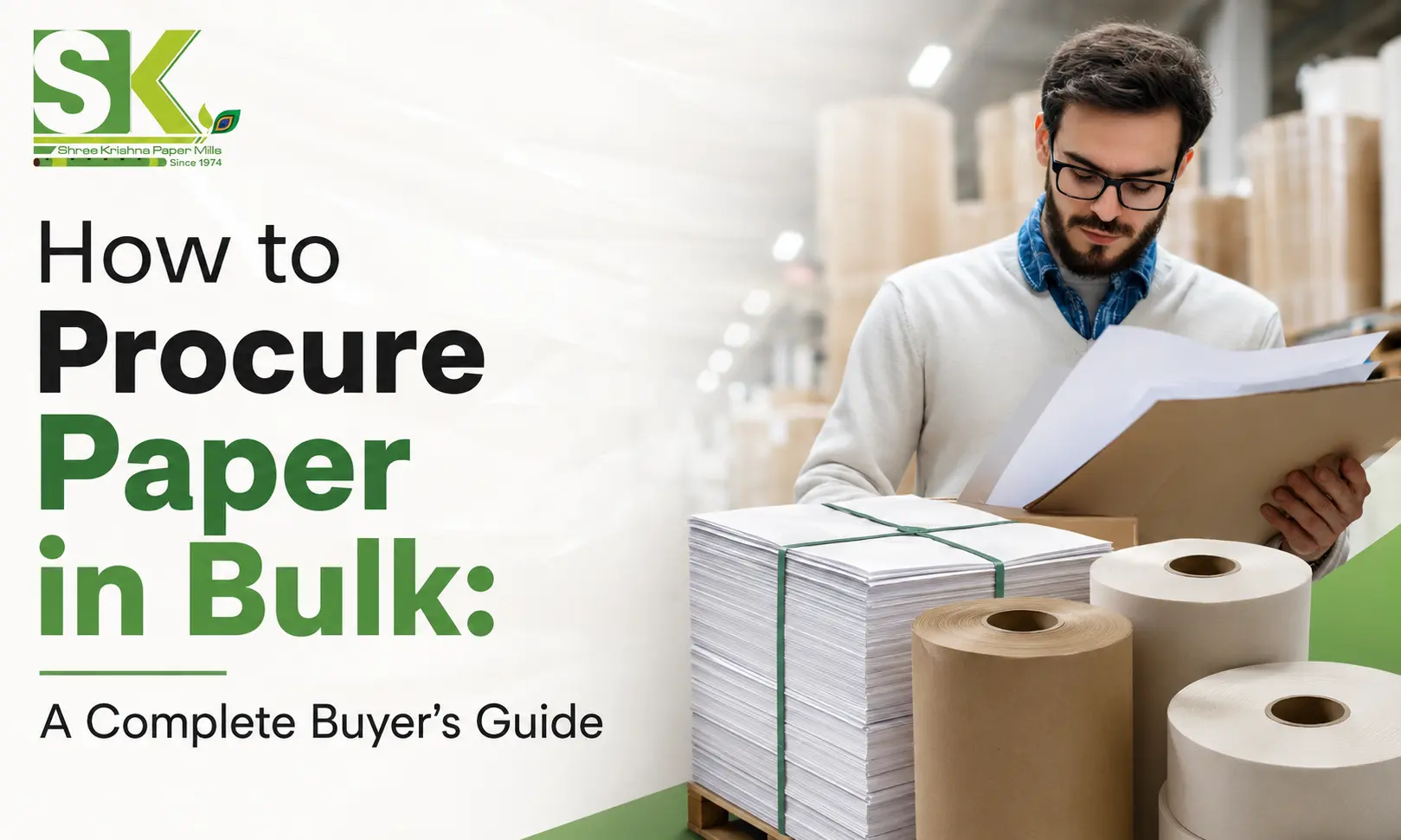
For successful paper procurement, there’s a lot more than just comparing prices. This directly influences production continuity, operational planning, and inventory planning, along with long-term relationships. Businesses can face sourcing challenges such as fluctuations in raw material costs, quality inconsistencies, and logistical delays when buying them in bulk.
This type of guide can simplify the paper sourcing process, thus offering the complete step-by-step overview from basic planning to supplier management. The major trusted bulk paper supplier thus understands the strategic sourcing that’s the backbone of operational success.
Key Takeaways
- A simple paper sourcing process can help in reducing costs plus the supply risks.
- The industrial paper supplier selection has to be aligned with the long-term business requirements.
- The complete procurement cost does matter when it’s aligned with the quoted price.
- Clear contracts plus quality expectations can improve the bulk paper procurement outcomes.
- The supplier performance needs to be monitored continuously through the use of defined KPIs.
What Is Paper Procurement?
The paper procurement process can be a strategic process for sourcing, purchasing and management of paper supplies for meeting business needs. Unlike simple purchasing (a transactional act), procuring this is a highly strategic business system that’s focused on total value, relationship building, or risk management. The procurement lifecycle for bulk sourcing includes identification of needs or market research, negotiation, supplier selection, ordering, and performance evaluation.
Understanding the Paper Supply Chain
Navigating the paper supply chain that’s important for highly effective outsourcing:
- Raw Material Suppliers: Recycled fibre or pulp is provided, forming its foundation for sustainable paper production.
- Paper Manufacturers: Producing paper in-house, thus offering customised expectations and high-quality consistency. This is great for bulk orders (great mills like SKPMIL will use 100% of those recycled fibres).
- Paper Traders: Sourcing from multiple mills, thus offering high product availability for those mixed or urgent orders.
- Paper Distributors: Maintaining the regional inventory for faster local deliveries plus readily available stock.
- Paper Importers: Sourcing of specialised papers from overseas processes; this requires careful considerations for import and shipping regulations.
Choosing the Right Procurement Model
Procurement Models | Great For | Considerations | Advantages |
Manufacturer | Large constant orders | High MOQs | Customization, Consistency. |
Trader | Urgent or mixed orders | Limited production control | Flexibility |
Distributor | Localized sourcing | Limited customization | Faster delivery |
Importer | Speciality of grades | Longer lead times | Global sourcing |
Lorem ipsum dolor sit amet, consectetur adipiscing elit. Ut elit tellus, luctus nec ullamcorper mattis, pulvinar dapibus leo.
Defining Your Procurement Requirements
Before approaching the wholesale paper supplier, they can clearly define the needs, GSM, roll sheet dimensions or paper grade, monthly consumption volume, and specific industry applications (printing and packaging) along with budget expectations.
Finding Reliable Paper Suppliers
For finding the right bulk paper supplier, you can explore manufacturer websites, industry associations, trade exhibitions, professional networks, and business referrals.
Shortlisting Potential Suppliers
Narrow down through evaluation of product portfolio, manufacturing capability, geographic reach, industry experience, and relevant certifications (e.g., BIS and ISO), along with financial stability.
Preparing an Effective Request for Quotation (RFQ)
An effective RFQ that ensures comparable and accurate quotes. It needs to include quantity requirements, product specifications, packaging requirements, and delivery schedule along with the commercial terms plus payment references.
Comparing Supplier Quotations Beyond Price
It’s important to look beyond price and base rate (although still have a keen focus on pricing). Evaluate other factors like packaging costs, freight charges, MOQ (Minimum Order Quantity), payment terms, quality assurance, total procurement costs, and technical support.
Factor | Value-Driven Supplier | Low-Cost Supplier |
Unit Price | Competitive | Lowest |
Quality Assurance | Rigorous testing | Minimal |
Lead Time | Guaranteed | Unpredictable |
Total Cost | Transparent | Hidden fees |
The Importance of Product Samples & Trial Orders
Do not skip testing. Just request basic physical samples, verify quality, and conduct production trials. The last approval for the trial run is important before committing to bulk production to avoid costly mistakes:
Negotiating Commercial Agreements
Effective negotiation can cover pricing structure and delivery commitments, SLA (service-level agreements), quality guarantees, plus price revision clauses for handling raw material market fluctuations.
Understanding Payment and Credit Terms
- Credit Terms: Credit limit, credit periods & documentation requirements.
- Payment Terms: Partial advance, advance payment, or these net payment terms.
These can actually impact the procurement planning for cash flow. The favourable credit terms from that paper supplier improve capital efficiency.
Understanding Incoterms for International Procurement
For global sourcing, understand the common terms:
- EXW (Ex Works): Buyers handling all the shipping processes from the seller’s premises.
- FOB (Free on Board): Sellers covering costs until the goods are on board the vessel.
- CIF (Cost, Insurance, and Freight): The seller can pay the insurance and shipping costs for the destination port.
- DDP (Delivered Duty Paid): Sellers handling all costs plus risks for the buyer’s location.
The Value of Annual Supply Agreements
Annual agreements that provide stable pricing, better production planning, reduced procurement risks, and guaranteed supply. They can foster those collaborative areas rather than transactional ones.
Vendor Onboarding Best Practices
Smooth onboarding requires proper documentation, product approvals, compliance verification, banking information setup, purchasing order system integration, plus establishing those communication channels.
Managing Supplier Risks
Those common risks include production delays, logistics disruptions, raw material shortages, purchase order system integration, quality issues, and regulatory changes. Mitigate the diversifying sources, conduct regular financial health checks, and maintaining safety for the industrial paper supplier.
Building a Backup Supplier Strategy
Relying on a single source is highly risky. Implementing dual sourcing, an approved supplier list, creating emergency procurement plans, and conducting regular supplier reviews to ensure continuity.
Procurement KPIs That Matter
Tracking these types of metrics for improving performance:
- On-time delivery rate: Measuring reliability.
- Purchase price variance: Tracking budget adherence.
- Lead Time: Timing from ordering to delivery.
- Supplier defect rate: Quality consistency metrics
- Inventory turnover: Efficiency of stock usage.
- Order Accuracy: Zero-error delivery.
- Emergency purchases: Indication of planning gaps.
- Supplier responsiveness: Speed for issue resolution.
- Procurement of cost savings: Overall financial efficiency.
Common Paper Procurement Mistakes to Avoid
- Skipping product testing
- Buying just on price.
- Poorer demand forecasting.
- Weakest supply communication
- Dependence on a single supplier
- Failing to monitor supplier performance.
- Ignorance towards hidden logistical costs.
Bulk Paper Procurement Checklist
- Suppliers Shortlisted
- Procurement requirements defined
- RFQs created & sent
- Total Cost – Quotations Compared
- Approved samples
- Commercial Terms Agreed Upon
- The correct vendor onboarded
- Backup supplier identified
- Performance measures established
Why Long-Term Supplier Relationships Matter
When choosing, a strong relationship actually matters. Through long-term partnerships, businesses can achieve stable pricing, better forecasting plus priority production for shortages, faster issue resolution, lower overall costs, product consistency, plus better supply chain resilience. Choosing a partner like Sri Krishna Paper Mills can provide the means and ground for having long-term success.
Conclusion
With the most effective paper procurement process that combines supplier collaboration, careful planning, constant performance evaluation, and risk management. Towards focusing on a basic long-term value, supply continuity, and operational reliability, companies can easily avoid common wholesale paper suppliers problems. Do not base the decisions just on price, but partner with the right bulk paper supplier that’s committed to sustainability and quality for driving your business forward.