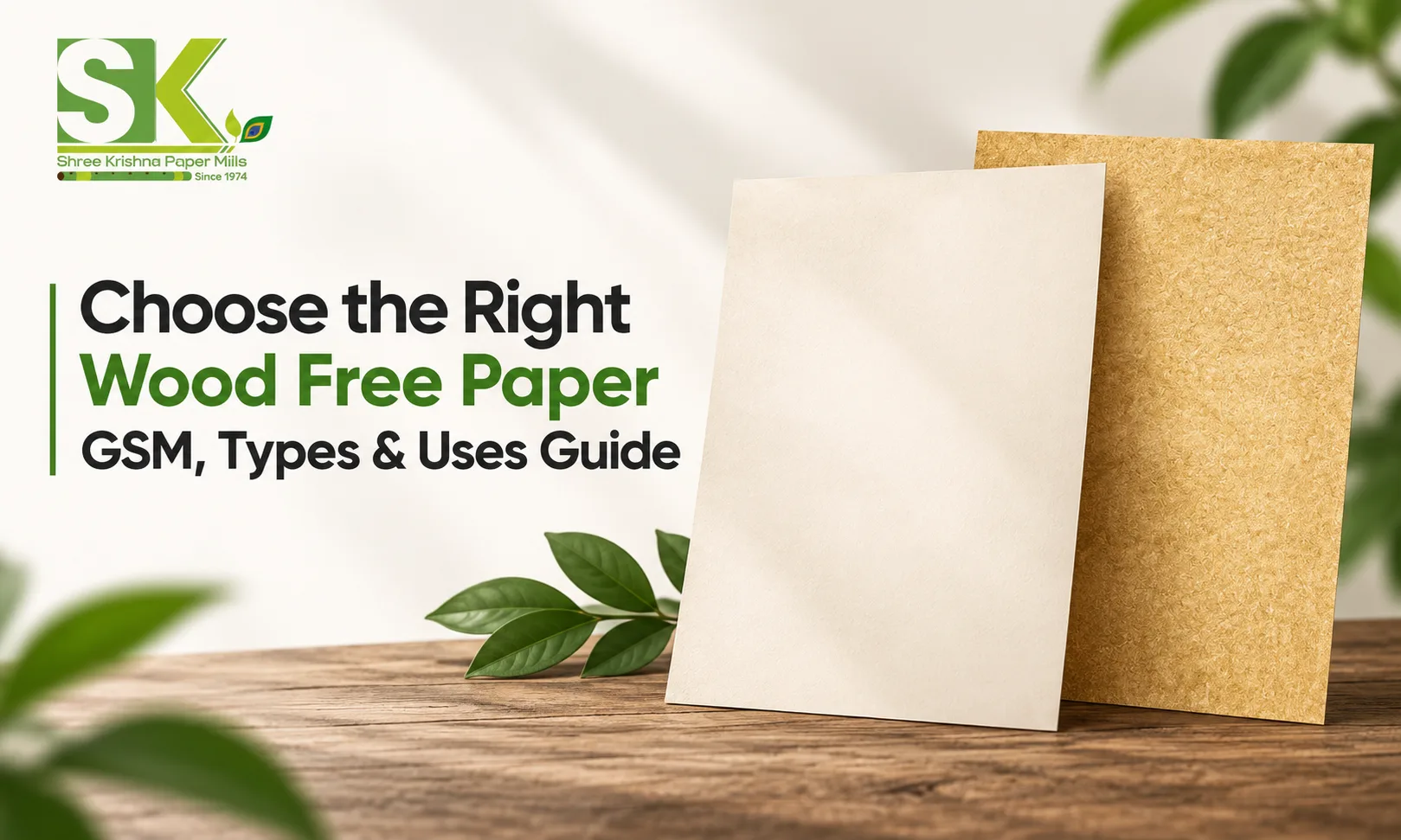
Picking the right wood free paper is not as simple as looking at the GSM and placing an order. The paper needs to match the printing process, finished product, required appearance, and handling conditions. A grade that works well for a book may not be the right choice for a brochure, office document, or other commercial printing application.
The Paper is available in different grades, finishes, and specifications. Understanding GSM, brightness, opacity, surface characteristics, and fibre composition can help buyers select a grade that performs consistently without paying for specifications they do not need.
What Is Wood Free Paper?
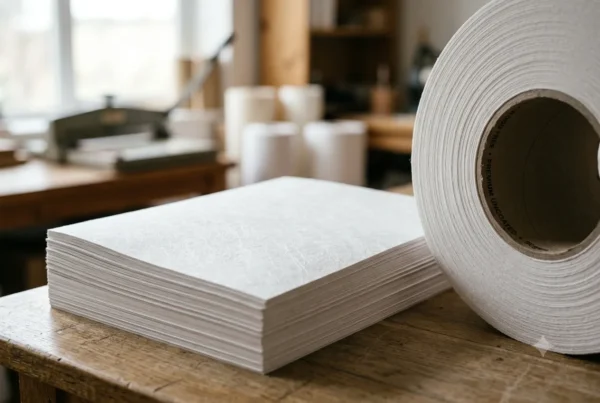
Wood free paper is generally produced from chemically processed wood pulp in which most of the lignin has been removed during the pulping process. The term “wood free” therefore does not mean that wood is completely absent from the manufacturing process.
Lignin is a natural component of wood that can contribute to yellowing and deterioration over time. Chemical pulping separates much of the lignin from cellulose fibres, allowing the resulting pulp to be used for paper grades where brightness stability, print quality, and durability are important.
For buyers, however, understanding the definition is only the first step. The more important question is which paper grade suits the intended application. This depends on factors such as GSM, opacity, brightness, surface quality, fibre composition, and printing requirements.
Types of Wood Free Paper
Wood-free paper is available in different grades, depending on its manufacturing process and intended use. The following categories provide a practical starting point when comparing options.
Uncoated
Uncoated does not have a conventional coating applied to its surface. It is commonly considered for books, notebooks, stationery, forms, reports, and other applications where readability and a natural paper feel are important.
Its surface can also be suitable for writing and general printing, depending on the specific grade and printing process.
Coated
Coated wood free paper has a coating applied to the surface to provide a smoother and more uniform finish. This can improve the appearance of printed images, graphics, and colours.
It may be suitable for applications where visual presentation is particularly important. The appropriate coating and paper grade should be selected according to the printing method and finished product requirements.
Recycled
Recycled wood free paper contains recycled fibre according to the specification of the particular grade. It can be considered when recycled content is an important part of a buyer’s material requirement.
However, recycled content should not be the only selection criterion. Buyers should also verify GSM, brightness, opacity, surface properties, fibre composition, and other technical specifications to ensure that the grade is suitable for the intended application.
Wood Free Paper GSM: Which Weight Should You Choose?
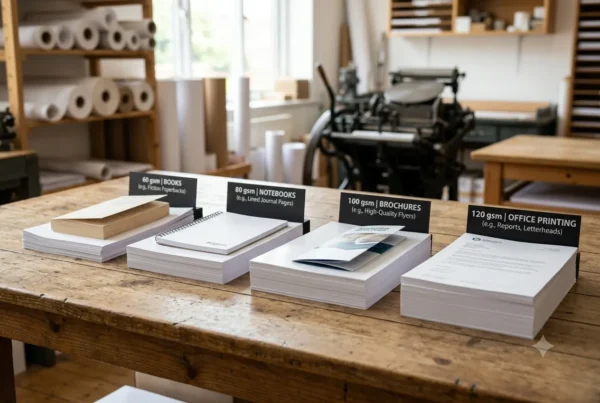
GSM stands for grams per square metre and indicates the weight of paper over a defined area. It is one of the first specifications buyers usually consider, but GSM alone does not determine the complete performance of a paper.
Two papers with the same GSM can have differences in thickness, stiffness, formation, and other physical properties because of differences in manufacturing and fibre characteristics.
A Practical Way to Understand GSM
- Lower GSM: Can be suitable when lightweight paper is preferred, particularly for text-heavy printed material.
- Medium GSM: Commonly considered for books, notebooks, stationery, reports, and general commercial printing.
- Higher GSM: Can be considered when the finished product requires greater substance, stiffness, or a heavier feel.
The right GSM ultimately depends on the finished product. Page count, binding, printing on both sides, handling, and the required finished weight should all be considered before selecting a grade.
Common Uses of Wood Free Paper
This paper is used across a wide range of printing and publishing applications because different grades can provide different combinations of printability, readability, surface quality, and weight.
Books and Textbooks
Wood free paper is commonly used for books and textbooks, particularly where readability and double-sided printing are important.
Opacity is an important consideration because text or images printed on the reverse side can show through a sheet with insufficient opacity. GSM should also be considered alongside the total number of pages, since paper weight can have a noticeable effect on the final weight and thickness of a large book.
Notebooks and Stationery
Wood free paper can be used for notebooks, writing materials, and stationery products. For these applications, the surface should provide a suitable writing and handling experience.
If both sides of the sheet are intended for writing or printing, opacity becomes particularly important. The appropriate grade will also depend on the writing instruments, printing method, and finished product design.
Forms and Office Documents
Forms, office documents, institutional stationery, and similar materials require paper that can feed and print consistently through the intended equipment.
Along with GSM, buyers should consider surface quality, formation, printability, and sheet dimensions to ensure reliable production.
Commercial Printing
Wood free paper is used across many commercial printing applications, including business documents, educational material, reports, manuals, and other printed products.
The requirements can vary considerably between applications. A text-heavy manual, for example, may require different paper characteristics from a document containing large images or extensive colour coverage.
Brochures and Reports
Wood free paper can also be considered for brochures, reports, corporate documents, and similar printed materials.
Uncoated grades can provide a natural paper feel, while coated grades may be considered when a smoother surface and stronger image presentation are required. The final choice should be based on the design, printing process, and desired appearance.
Offset Printing
Wood free paper is widely considered for offset printing applications, including books, stationery, commercial documents, and publishing materials.
The paper should be compatible with the selected printing process and provide suitable ink absorption, surface strength, formation, and dimensional stability for consistent printing results.
How to Choose the Right Wood Free Paper?
Choosing a suitable wood free paper grade becomes easier when the selection process starts with the finished product rather than the paper specification alone.
1. Start With the Application
First identify exactly what you are producing.
Consider:
- What will be printed?
- How will the finished product be used?
- Will printing be done on one or both sides?
- How will the paper be handled?
- What type of binding or finishing will be used?
The answers will help narrow down the appropriate paper characteristics.
2. Select the Appropriate GSM
Once the application is clear, consider the required paper weight.
The right GSM can depend on:
- Number of pages
- Finished product weight
- Binding requirements
- Required stiffness
- Double-sided printing
- Handling and finishing requirements
Avoid selecting GSM based only on price or a general application label. The same application can sometimes require different grades depending on the final product specifications.
3. Check Brightness
Brightness affects the visual appearance of the paper and the contrast between the sheet and printed content.
For books, reports, stationery, and other text-heavy products, the required brightness should be considered alongside readability and the desired finished appearance.
For commercial orders, compare the actual technical specifications of available grades rather than relying only on general descriptions.
4. Evaluate Opacity
Opacity is particularly important when printing or writing on both sides of the sheet.
Higher opacity can help reduce show-through from the reverse side, which can improve readability in books, textbooks, notebooks, and other double-sided applications.
5. Consider Smoothness and Surface Quality
Surface characteristics influence both the feel of the paper and its printing behaviour.
A smoother surface may be preferred for certain image-heavy or high-quality printing applications, while an uncoated surface may be more suitable when a natural paper feel is required.
The appropriate surface should therefore be selected according to the printing process and final appearance.
6. Match the Paper With the Printing Process
Tell your paper supplier how the material will be printed.
Offset and digital printing can have different paper requirements. Ink absorption, surface strength, formation, and other characteristics can influence print consistency.
For larger commercial orders, paper testing the selected grade before full-scale production can help identify potential printing or finishing issues.
7. Confirm Sheet or Reel Size
A paper grade may meet your GSM and quality requirements but still be unsuitable if it is not available in the required format.
Before placing an order, confirm:
- Sheet size
- Reel width and length, where applicable
- Required format
- Quantity
- Packaging requirements
- Production and delivery schedule
Providing these details to the supplier can make procurement more efficient and reduce the risk of receiving a grade that does not fit the production setup.
How to Choose the Right Wood Free Paper?
When comparing wood free paper grades, buyers should look beyond GSM and review the paper specifications that directly affect printing performance and finished-product quality.
Specification | Why It Matters |
GSM | Helps determine the paper weight for the intended application |
Brightness | Influences the visual appearance and contrast of printed content |
Opacity | Helps minimise show-through during double-sided printing |
Smoothness | Affects surface feel and printing behaviour |
Formation | Indicates the uniformity of fibre distribution within the sheet |
Surface Strength | Helps the sheet withstand printing and finishing processes |
Fibre Composition | Provides information about the material characteristics of the specific grade |
For commercial procurement, buyers should also request the relevant technical specifications or Technical Data Sheet (TDS) where available.
Where to Buy Wood Free Paper for Commercial Printing?
If you are purchasing wood free paper for commercial printing, start by explaining the application to your supplier rather than asking only for a particular GSM.
Sharing details about the finished product and printing process can help the supplier recommend a grade that matches the actual requirement.
Before placing an order, confirm:
- Paper grade
- GSM
- Sheet or reel size
- Required quantity
- Brightness
- Opacity
- Surface characteristics
- Packaging format
- Availability
- Delivery requirements
- Technical specifications or TDS, where applicable
For businesses looking for wood free paper for books, notebooks, stationery, offset printing, and other printing and publishing applications, SKPMIL provides paper solutions for diverse commercial requirements with manufacturing and distribution capabilities serving customers across India.
Final Thoughts
Choosing the right wood free paper does not have to be complicated. Start with the application, then evaluate GSM, brightness, opacity, surface quality, fibre composition, and compatibility with the intended printing process.
There is no single wood free paper GSM that works for every application. Books, notebooks, office documents, brochures, and commercial printing projects can have different requirements.
By matching the paper grade with the finished product and confirming the technical specifications, buyers can select a paper that provides the required print quality, handling characteristics, and production performance while avoiding specifications they do not actually need.