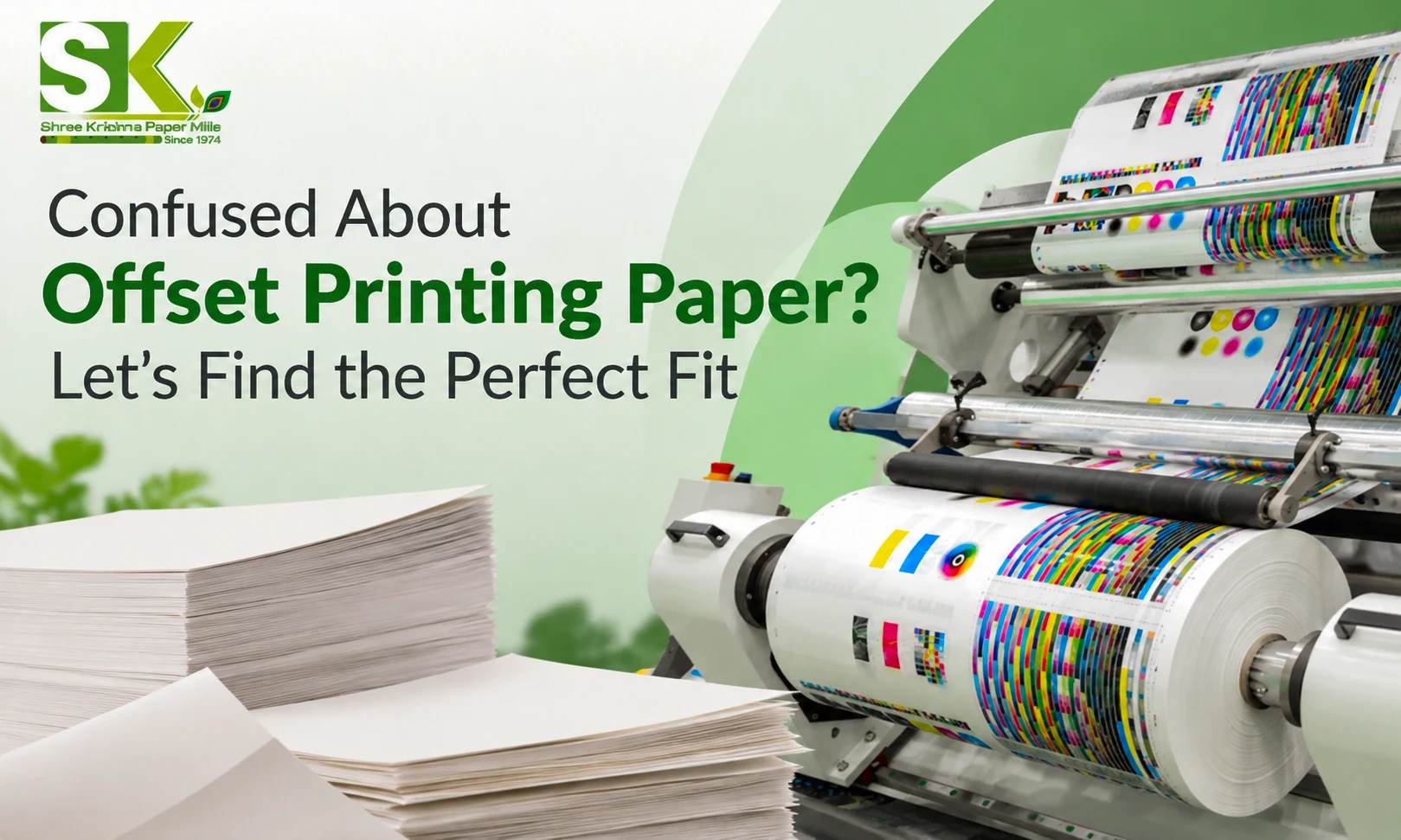
Choosing offset printing paper is easier when you start with a printing job than just picking a GSM. A paper that works well for a textbook might not be the right choice for a brochure or other commercial printing requirement. The main things that you need to consider are GSM surface quality opacity and ink absorption and the way the finished material will be used.
Offset paper is generally an uncoated paper used for printing text and other content. It is available in different grades and specifications so the product name alone is not enough when you are placing a commercial order. The practical approach is really simple. First , decide what you are printing and compare the paper specifications that matter for the job.
What is offset printing paper?
Offset printing paper is paper made for use in offset printing and is commonly available as an uncoated printing paper. Unlike coated paper it does not have a coating layer designed to give your sheet a glossy or a coated surface. This gives it a more natural paper FEEL makes it suitable for many everyday printed products. Many offset grades are also known as uncoated wood free paper. Wood free refers to the type of pulp used rather than meaning that the paper contains no wood derived material. In simple terms wood free means that the paper is made using chemical pulp with extract fiber composition depending on the grade.
Some of the important properties include:
- Surface strength, which affects how the sheet behaves during printing.
- Opacity, especially when both sides of the sheet are printed.
- Brightness affects the appearance and contrast of printed content.
- Smoothness, which can influence print consistency and paper feel.
- Formation, meaning how evenly fibres are distributed throughout the sheet.
- Ink absorption, which needs to be suitable for the printing process and the type of content being printed.
Types of offset printing paper
Uncoated offset printing paper
This is an everyday category that most people have in mind when they talk about offset paper. It has no typical coating on the printing surface and is used for a wide range of text based and commercial printing applications. It can be supplied in different g SMS and grade depending on the required print quality.
Woodfree offset paper
Wood free offset paper is commonly used when the paper needs suitable printability, opacity and surface characteristics. You can generally use it for books, educational material and office documents. Again, exact specifications vary by grade.
Recycled offset paper
Some offset papers contain a specific percentage of recycled fiber. These grades can be selected when recycled content is part of the buyers material requirement. The important point that you have to check is the actual fiber specification rather than just assuming that all uncoated or offset paper contain recycled materials switched up
Different shades and finishes
Offset paper might also be available in different shades or surfaces depending on the gradient application. For most commercial buyers however the decision should remain focused on the actual printing requirement rather than just choosing based on the broad paper category alone.
Types of offset printing paper
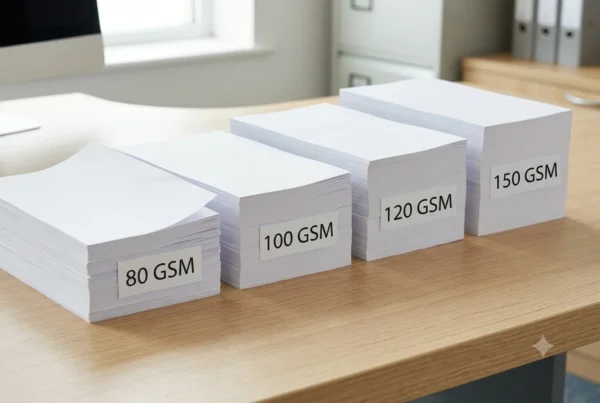
Before choosing offset paper GSM you need to understand what GSM actually tells you. GSM means gram per square metre. It is a measurement of paper weight and not thickness. The distinction matters because 2 papers with similar GSM can have different thickness and bulk depending on their composition and manufacturing characteristics.
Application | General GSM direction | What to consider |
Lightweight text pages | Lower GSM | Keep the finished product light and economical |
Books and textbooks | Medium GSM | Balance weight, opacity and readability |
Notebooks | Medium GSM | Consider writing feel and two-sided use |
General commercial printing | Medium GSM | Match GSM to printing and finishing needs |
Applications needing more substance | Higher GSM | Consider thickness, handling and final product weight |
These are broad guidelines, not fixed rules. The right offset paper GSM can change depending on the printing process and the paper grade. For a large book for example choosing a heavier sheet might increase the final thickness and weight considerably.
Common uses of offset printing paper
Books and textbooks:
Offset paper for books is commonly selected for text heavy publications or educational books. Opacity opacity is very important because printing is usually present on both sides of each page. If the print from the reverse shows through too strongly it can make reading very uncomfortable. GSM is also considered alongside the total page count. A small increase in GSM across hundreds of pages can make a noticeable difference in the finished book.
Notebooks:
Offset paper can also be used for notebooks and writing material. The choice depends on how the notebook will be used. If you write on both sides , opacity and surface characteristics become very important.
Brochures and leaflets:
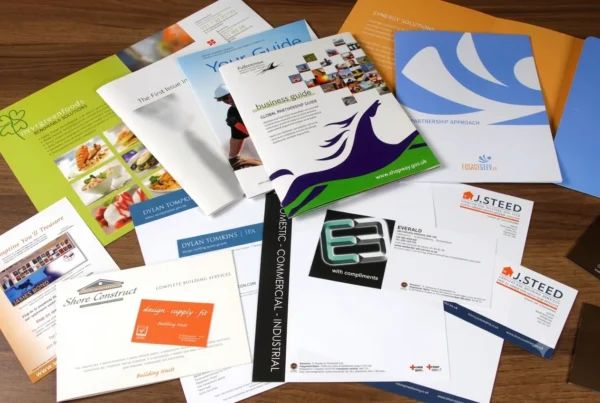
Offset paper for brochures can be when the desired result is an unquoted more natural paper rather than a coated finish. The appropriate grade depends on the design amount of ink and folding requirements.
Forms and office documents:
Forms Letterheads and internal documents are other common applications. For these jobs you need to prioritize reliable printing performance and appropriate gsm.
Reports and manuals:
Report manuals and instruction material often contain large amounts of text and might be printed on both sides. Your readability and opacity matter.
Commercial printing:
The term printing paper for commercial printing covers many different products so there is no single specification that works for every job.
How to choose the right offset paper for your printing job
This is the part that matters most when you are actually buying paper.
- Start with printing application: Are you printing a book notebook or manual? The answer generally narrows down the type of paper you need. A book might prioritize opacity and readability while a brochure might place more focus on appearance.
- Decide the required gsm: Once the application is clear you need to choose a suitable GSM. You should not automatically assume that higher GSM means better paper. A heavier sheet can increase product weight and cost while a lighter sheet may be more suitable.
- Check brightness and opacity: Brightness affects how printed material looks while opacity is especially important for double sided printing. If you are printing a notebook or textbook do not skip the opacity specification.
- Look at smoothness and printability: The paper surface affects how it feels and how it performs during printing. A suitable surface can help produce more consistent results particularly when the job involves detailed text or images.
- Consider double sided printing: If the paper will be printed on both sides, you need to check opacity and ink absorption carefully.
- Confirm sheet or reel size: The paper size must match our printing equipment and production requirements. Before ordering you need to confirm whether you need sheets of the exact dimensions required.
- Consider your order quantity: For commercial printing quantity can affect purchasing terms and availability. You can share your respective requirements with the supplier so that you can port the appropriate packing and quantity.
Offset Printing Paper Specifications Buyers Should Check
Specification | What it tells you | Why it matters |
GSM | Weight per square metre | Helps select the appropriate paper weight |
Brightness | Appearance and contrast potential | Important for the look of printed content |
Opacity | Resistance to show-through | Important for double-sided printing |
Smoothness | Surface characteristics | Can affect print consistency and feel |
Formation | Uniformity of fibre distribution | Can influence appearance and printing behaviour |
Surface strength | How well the surface holds together | Useful during printing and finishing |
Fibre composition | Type and specified proportion of fibre | Relevant to paper characteristics and purchasing requirements |
Where to buy offset printing paper for commercial printing?
When buying offset paper for commercial requirements the supplier should be able to match the paper grid to your application rather than just quote a GSM.
Before placing an order, confirm:
- Required paper grade
- GSM
- Sheet or reel dimensions
- Required quantity
- Intended application
- Brightness and opacity requirements
- Packing details
- Availability
- Delivery location and timeline
- Technical specification or TDS, where required
The information gives an offset paper supplier enough detail to recommend appropriate grades and prepare a more useful quotation. You need to also ask for a sample when the paper is being used for a large printing project. A sample allows you to check how the sheet feels and prints before committing to the full quantity.
Conclusion
If you’re looking for a suitable offset or writing and paper for commercial requirements SKPMIL can help you identify the appropriate paper grade based on your application and other requirements.
So you must know that choosing the right offset paper does not have to start with a long list of technical terms. Just start with the application then decide the GSM consider the printing requirements and finally compare suppliers based on actual grade being offered. For books and textbooks Opacity and readability might matter the most. For notebooks writing feel and 2-sided use can be important. For brochures and other commercial printing surface quality appearance and printing performance might take greater importance.