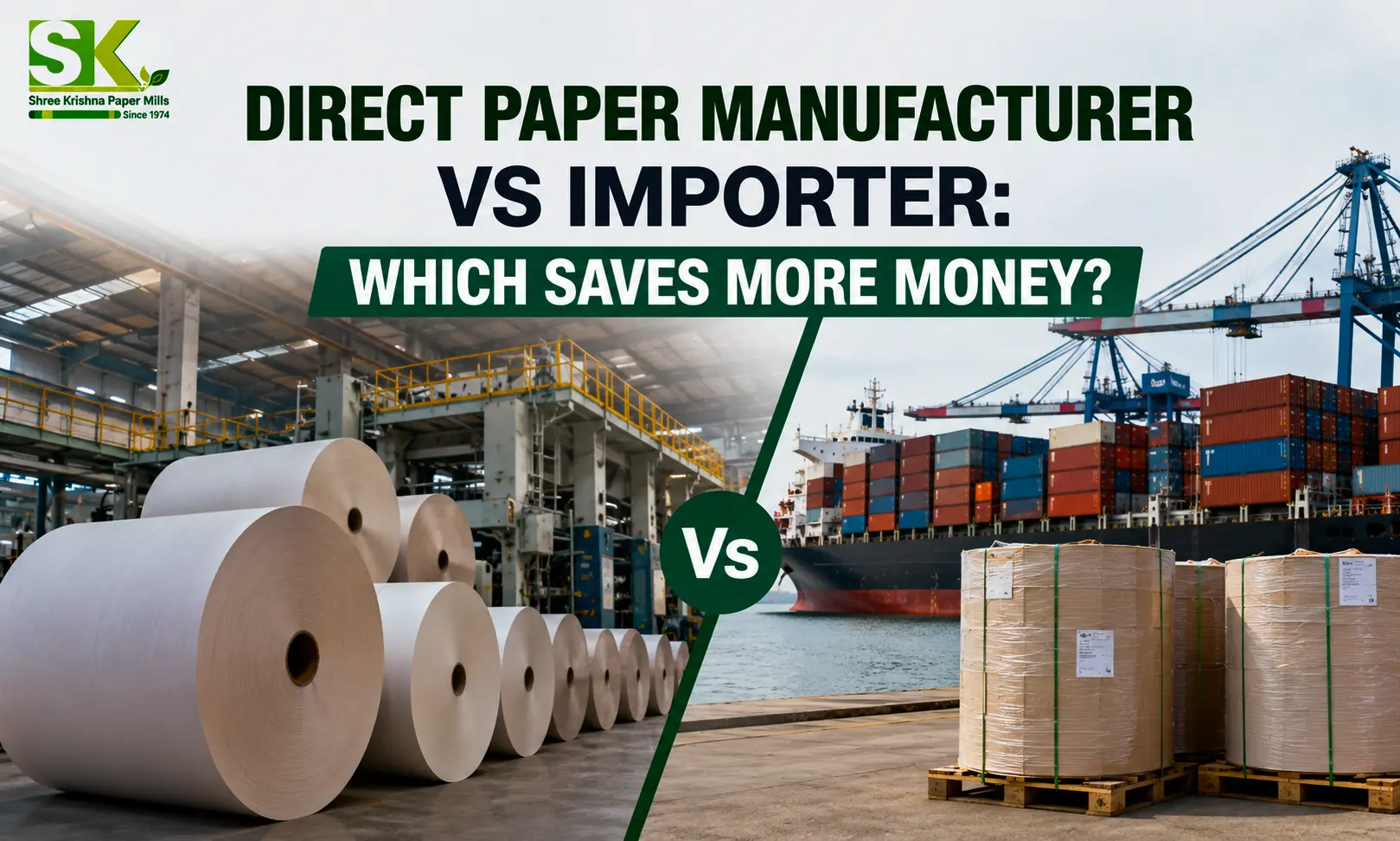
Many businesses that buy paper in bulk quantities will be comparing the two options and will want to know if it is better to buy directly from a paper manufacturer or the importer. The quoted price might be the most important consideration, but many purchasers do not consider the extra expenses that can add up and have a big impact on the total procurement budget. Various shipping costs, import duties, lead times, inventory costs, quality consistency, and after-sales support all affect the total cost of ownership. The wrong sourcing can cause delays in production, increased operating costs, and disruption of supplies.
This guide outlines the distinctions between manufacturers and importers, identifies key factors that influence total procurement costs, and offers a framework for businesses to make the most cost-effective decision for long-term procurement of paper and for paper procurement in an efficient manner.
Key Takeaways
Before comparing suppliers, keep these important points in mind:
- The price paid for the product is not necessarily the lowest cost of total procurement.
- Total costs include freight, storage, quality, and lead times.
- Collaborating with suppliers over an extended period can be more cost-effective than buying items just one time.
- The right sourcing depends on your business size, paper specifications, and frequency of purchasing.
- When businesses try to save money on their procurement, they can make better decisions by comparing the total procurement cost.
Why Your Buying Method Affects Overall Costs
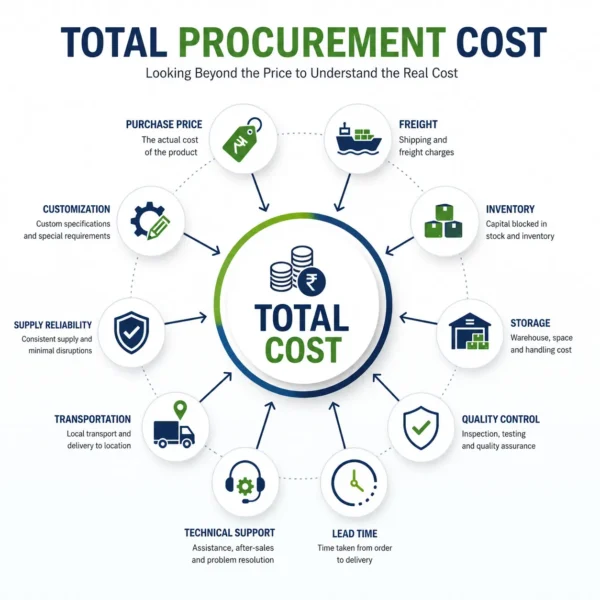
The cost on a quotation is just one component of the overall cost. When considering paper costs, companies need to look at all aspects of spending on paper.
Important cost factors include:
- Purchase price
- Freight and transportation
- Lead time
- Inventory holding costs
- Product quality consistency
- Technical support
- Supply reliability
- Long-term pricing stability
For instance, fluctuating quality of a lower-priced product can lead to production waste, and late deliveries can cause disruption in production lines. Businesses can lower risks in operations and enhance long-term procurement efficiency by considering costs beyond the upfront price.
Who Should Read This Guide
This guide can help organisations that purchase paper regularly, such as:
- Procurement managers, Packaging companies
- Printing businesses, FMCG manufacturers
- Food packaging companies, Industrial buyers
- Exporters, Large retail brands
If your business is buying standard office paper or special industrial paper, you can make better buying decisions by knowing your sourcing options.
Understanding the Two Buying Options
Buying Directly from a Paper Manufacturer
A paper manufacturer produces paper that sells directly to the customers without the intervention of trading intermediaries.
How Manufacturers Supply Customers
Manufacturers typically supply:
- Corporate buyers
- Industrial customers
- Packaging companies
- Printers
- Export businesses
- Large distributors
Most manufacturers specialise in medium- to high-volume orders and can often offer custom production according to customer requirements.
Common Advantages
There are several advantages to purchasing directly from a manufacturer:
- Direct communication with production teams (CMD)
- Better product customization
- More flexibility to set specifications
- Better uniformity of product quality
- Long-term supply agreements
- Competitive pricing for large quantities
When This Option Works Best
Buying directly is often the best choice for:
- High monthly purchases quantities
- Custom paper grades are suitable for businesses that require them
- Companies that have a consistent demand
- Long-term procurement contracts
- Organisations looking for consistent quality
Direct engagement with the paper manufacturer in India can also help simplify communication as well as the procurement process for domestic buyers.
Buying Through an Importer
Importers buy paper from manufacturers in various countries and sell the paper to businesses in the local country.
Typical Buying Process
The importer generally:
- Sources products internationally
- Manages shipping and customs documents
- Stores inventory
- Supplies products to local customers
Importers may hold stocks of various international brands so that buyers can obtain products that may not be produced locally.
Common Advantages
Buying through an importer may provide:
- The evaluation of international paper grades
- Smaller order quantities
- Quick shipping with local stock
- Multiple product options
- Simplified purchasing process
When This Option Works Best
Importers are often appropriate for:
- Small purchase quantities
- One-time projects
- Specially selected imported paper grades
- Companies testing out new products
- Businesses with no long-term procurement contracts
The decision between a paper importer vs manufacturer depends on your purchase quantity, custom requirements, and business longevity.
Direct Paper Manufacturer vs Importer
The following table compares the two sourcing approaches based on the following procurement factors:
Comparison Point | Direct Manufacturer | Importer |
Purchase Price | More competitive for bulk orders | May contain importer margins |
Shipping Costs | Relies on the delivery location | May cover international freight charges |
Lead Time | Usually predictable when producing planned production | Uses import schedules and inventory |
Product Customization | High | Usually limited to available stock |
Quality Control | Directly handled at manufacturing time | Depends on the overseas manufacturer |
Technical Support | Direct access to the manufacturing team | Typically delivered via an importer |
Minimum Order Quantity | Often higher | Often lower |
Supply Reliability | Confident with long contracts | Depends on inventory availability |
Communication | Direct with the manufacturer | Through intermediary |
Long-Term Cost | Price is typically discounted for regular bulk orders | May be higher because of extra costs in the supply chain |
Both choices have their advantages and disadvantages. The right one will depend on your purchasing needs, production timelines, and procurement approach.
Factors That Affect the Total Cost of Buying Paper
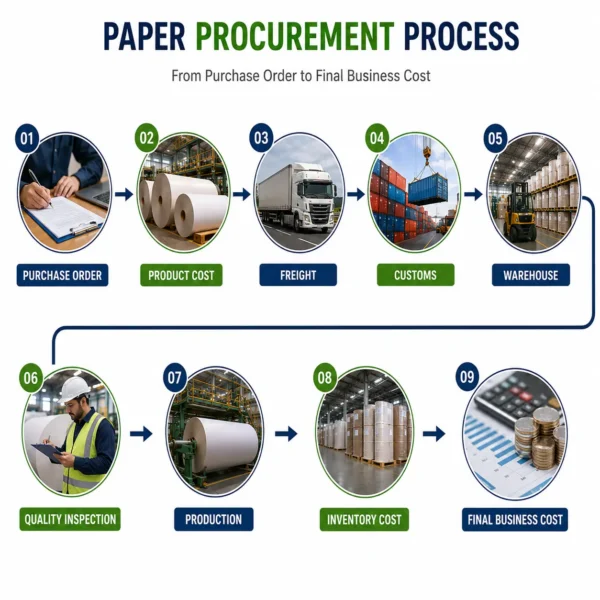
The total procurement cost involves assessing more than just the cost to purchase.
Purchase Price
The quoted price is the starting point, but businesses must always take into account the price of transportation and the quality of products and services, in addition to the price of the quotation.
Shipping and Transportation Costs
Freight costs may have a big impact on total procurement costs, especially for high-volume orders. Before choosing a supplier, businesses should consider several factors, including transportation expenses, delivery times, and logistics assistance.
Import Duties and Taxes
Duties and taxes may apply to imported paper products depending on the destination country, applicable trade regulations, and product classification. Those extra costs should always be added to the total landed cost.
Inventory and Storage Costs
Inventory management is a significant part of the overall costs of paper procurement. Purchase larger quantities for lower unit cost but higher storage costs.
Businesses should consider the following:
- Warehouse space requirements
- Inventory carrying costs
- Insurance expenses
- Risk of product damage during storage
- Cash tied up in stocks
Finding the right balance between order quantity and storage capacity helps improve procurement efficiency.
Product Quality and Waste
The quality of paper has an obvious effect on productivity. Printing on inconsistent paper can cause printouts to go wrong, cause machine downtimes, and result in wasted paper.
Poor-quality paper can lead to:
Higher rejection rates, More paper jams, Increased production waste, Additional replacement costs, Customer complaints
A reliable supplier ensures consistent quality and thus decreases these hidden operational costs.
Production Delays
Late deliveries may impact manufacturing schedules and customer commitments.
Possible consequences include the following:
- Production downtime
- Missed delivery deadlines
- Buy in an emergency at a higher price
- Increased operational costs
Having a reliable supplier with a consistent delivery time helps businesses prevent expensive disruptions.
Custom Paper Requirements
Numerous companies have specific technical paper requirements.
Examples include:
Custom GSM, Special sheet sizes, Food-grade paper, Packaging paper, Printing-grade paper, Special coatings
A direct paper manufacturer tends to be better equipped for customizing paper grades since the manufacturing is not outsourced to third parties.
Long-Term Supply Agreements
Long-term procurement agreements can also offer benefits other than price.
Benefits may include:
- Stable pricing
- Priority production scheduling
- Consistent product quality
- Better inventory planning
- Stronger supplier relationships
In situations where businesses are consistently purchasing bulk paper, they can enter into a longer-term contract for a more stable supply.
When Buying Directly from a Manufacturer Makes More Sense
For businesses that are in a continuous need for supply and consistent quality, it is often best to buy directly from the manufacturer.
This option is suitable for:
- High monthly buying volumes
- Long-term procurement contracts
- Custom paper specifications
- Businesses that need a consistent product quality
- Manufacturers with regular production needs
Collaborating directly with a paper manufacturer in India can also streamline communication, shorten delivery times, and offer flexibility for buyers in India.
When Buying Through an Importer May Be a Better Choice
In some cases, however, the importer is still a viable option.
Examples include:
- Small order quantities
- One-time purchasing requirements
- Products not produced locally
- Access to certain specialty imported paper grades
- Immediate acquisition of materials from nearby suppliers
The decision between a paper importer vs manufacturer should always be based on business requirements, not on pricing.
Common Cost Mistakes Buyers Make
A lot of procurement teams just consider the quoted price without taking into account a few other hidden costs.
Common mistakes include:
- Comparing only the cost of the product
- Focused only on product cost
- Not calculating total landed cost
- Ignoring quality-related production losses
- Not accounting for the costs associated with carrying inventory
- Failure to consider long lead times
- Not evaluating suppliers for reliability
Taking a full view of procurement costs will make for better long-term purchasing decisions.
Questions to Ask Before Choosing Between a Manufacturer and an Importer
Before placing a large order, ask these important questions:
- What is the total landed cost?
- Are paper specifications customisable?
- How long will it take to receive?
- Does this pricing offer long-term pricing options?
- What sort of quality check is performed for the product?
- What technical support is provided?
- How are supply disruptions handled?
These questions assist buyers in evaluating suppliers based on practical business requirements.
Cost Comparison Checklist
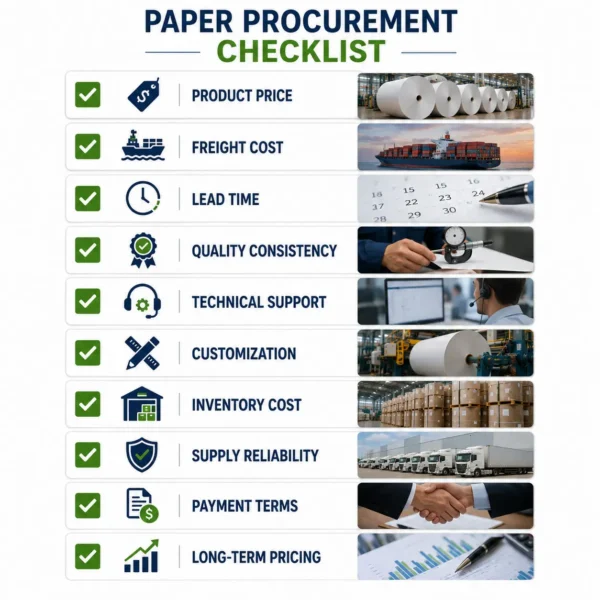
Use this checklist before making your final sourcing decision.
- Product price
- Freight and transportation expenses
- Import duties and taxes (where applicable)
- Lead time
- Product quality consistency
- Customization capability
- Technical support
- Supply reliability
- Payment terms
- Inventory and storage costs
There are several factors to consider when reviewing a full picture of the actual procurement costs and not just the purchase price.
Why Many Businesses Prefer Buying Directly from Manufacturers
Many organisations would prefer to work directly with manufacturers, as they can find more transparency in the supply chain.
Here are some benefits of these:
- Real-time visibility of production processes
- One-to-one contact with technical staff
- Greater customization options
- Improved quality consistency
- Faster issue resolution
- Improved long-term supply connections
- Improved planning of repeat purchases
These benefits can contribute to operational efficiency and mitigate procurement risks in the long term.
Why Businesses Choose SKPMIL
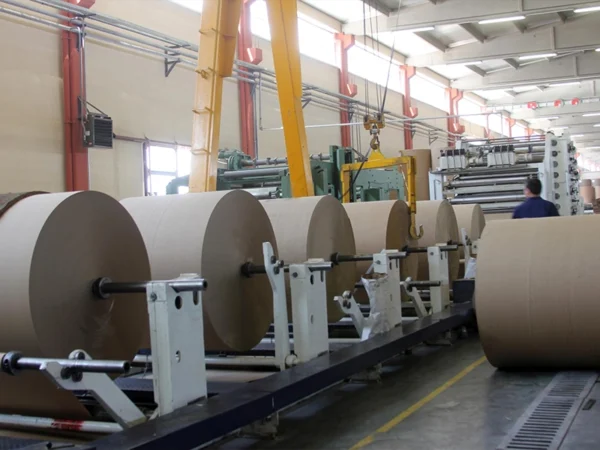
SKPMIL is preferred by many businesses due to its manufacturing experience and commitment to quality.
They have recognised strengths in:
- Over 50 years of manufacturing experience
- A variety of paper products are available
- Quality-focused manufacturing processes
- Sustainable production practices
- Pan-India supply capabilities
- Export support for international customers
- Customization for bulk paper needs
The features listed above make SKPMIL the right choice for companies looking for dependable paper supply answers for the long-term.
Conclusion
When it comes to choosing between a direct paper manufacturer and an importer, you need to consider more than the cost of the paper. The procurement cost involves factors like freight, quality of the product, reliability of supply, customisation, technical support, inventory costs, and long-term supplier relationships. Companies that consider the entire sourcing process are more likely to deliver quality, reduced production disruptions, and enhanced long-term value.
If you’re considering direct manufacturing or importing, comparing suppliers based on actual procurement criteria will aid you in making informed choices. We at SKPMIL feel that smart sourcing starts with careful evaluation, communication, and having a procurement strategy that not only focuses on the quality and reliability of the products but also on sustainable long-term business relationships.