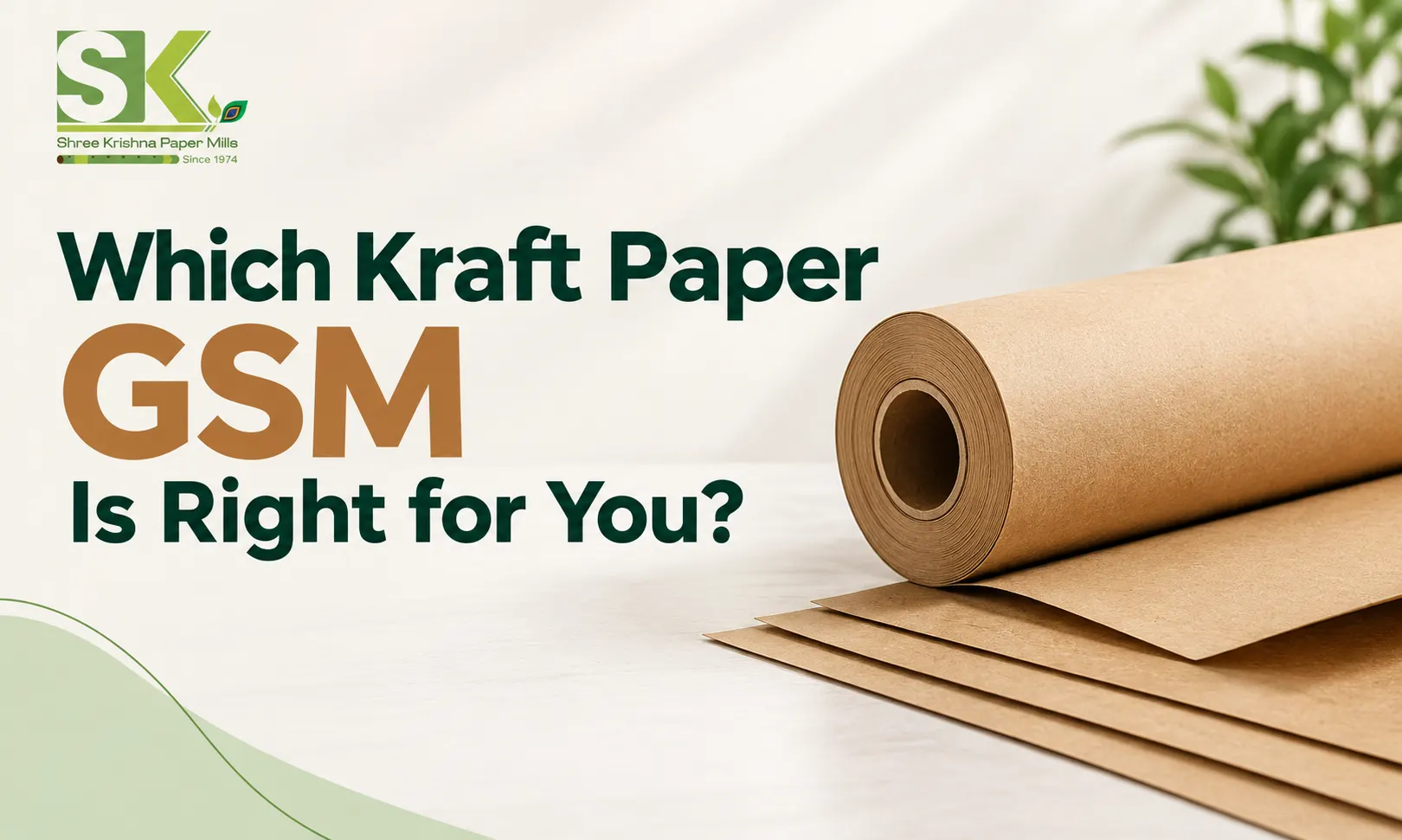
When you are choosing kraft paper for packaging, GSM is one of the specifications that you will come across first. What does it actually tell you? And does a higher GSM always means Stronger or better paper? Not necessarily. Gsl helps you understand the weight of the paper but packaging performance also depends on the thickness and the quality. A lightweight wrapping paper and heavy duty bag have very different requirements. This kraft paper GSM guide helps you understand GSM and how it relates to sickness and strength.
What does GSM mean in kraft paper?
GSM means grams per square meter. It refers to how much one square metre of paper weighs. In simple terms a higher GSM regularly means there is more paper material in the same area while a lower GSM indicates a lighter paper.
For example, at GSM, standard paper weighs 80 grams per square meter, while 120 GSM craft paper weighs 120 grams per square meter. But GSM should not be confused with thickness or strength. Kraft paper weight is measured through GSM while thickness is normally measured separately, often in microns.
What Does a Kraft Paper GSM Chart Tell You?
A kraft paper GSM chart is useful for understanding how different paper weights are commonly positioned across packaging applications. The exact thickness and performance can vary, so the ranges below should be treated as general reference rather than a technical specification.
Approx. GSM Range | General Paper Weight | Typical Characteristics | Common Applications |
40–70 GSM | Lightweight | Flexible and easy to handle | Wrapping, liners, light protective use |
70–100 GSM | Light to medium | Better handling strength | Wrapping, inserts, lightweight bags |
100–150 GSM | Medium | More body and stiffness | Bags, wrapping, retail packaging |
150–250 GSM | Medium to heavy | Greater stiffness and durability | Stronger bags, covers, packaging components |
250+ GSM | Heavy | Rigid and substantial | Heavy-duty packaging, boards and specialised applications |
What GSM is suitable for different packaging applications?
When choosing kraft paper for wrapping and protective packaging, think about what you are packing and how much protection it needs. Lightweight kraft paper is often suitable for wrapping products or separating items. It is flexible, easy to handle and works well when you do not need much cushioning.
If you are packing heavier items or need the wrapping to hold its shape during handling a higher GSM paper might be your best bet. For example wrapping clothes or lightweight products generally requires less strength as compared to wrapping metal parts or products with rough edges. Before finalizing the GSM you need to consider the shape and handling requirements. Choosing the right paper helps you protect your products without using more material than necessary
What GSM is suitable for industrial packaging?
Industrial packaging often places greater demands on paper. The material might need to withstand heavier products or transportation conditions. In these situations GSM is just one part of the specification. Tensile strength and post performance and the construction of the finished packaging can become equally important. For heavy duty applications it’s always good to work with a packaging supplier or paper manufacturer to identify the required specifications rather than selecting GSM based on a general chart.
How do you choose the right weight for your packaging?
Start with the job that the paper needs to perform instead of asking what is the highest gsmi can buy and ask what does this packaging need to handle? Consider factors like types of packaging product weight required strength folding and converting besides moisture exposure. It is also worth considering the complete packaging design. A well designed bag made from an appropriate GSM can perform better than a poorly structured bag made from much heavier paper.
Gsm versus thickness
Neither GSM nor thickness is automatically more important. GSM tells you the weight of the paper per square metre while thickness tells you how thick the actual sheet is. Both can help you understand the material but neither one alone tells the complete story about packaging performance. It is especially important when comparing different kraft paper grades.
A higher GSM might not always have proportionally greater thickness while 2 papers with similar thickness might have different GSM values. Paper density, fiber structure and manufacturing methods can influence these characteristics. When buying kraft paper, you need to ask for relevant technical specifications rather than just comparing GSM alone.
Conclusion
Choosing the right kraft paper GSM is way more than just selecting a heavier or a lighter sheet. The right paper depends on your packaging type and strength. Use a kraft paper GSM chart as a starting point but always consider thickness and strength alongside paperweight.
For bags and industrial packaging the best choice is the one that provides the performance your application just requires. If you are comparing kraft paper for a specific packaging project, discussing your product weight, bag size, and end use with your supplier can help you arrive at a much more suitable specification