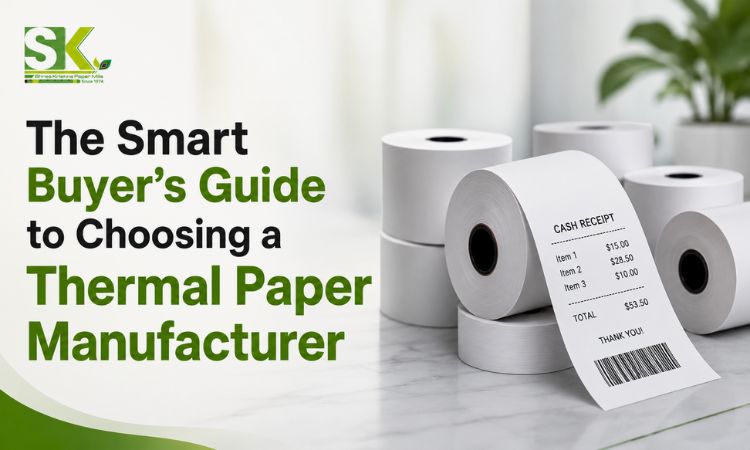
Businesses like banking, healthcare, retail, etc are highly dependent on thermal paper for their every-day operations. But, issues like poorly printed receipts, supply chain disruptions, and compliance concerns can cause major operational challenges. Whether it is a retail store processing customer transactions, a bank issuing ATM receipts, or a healthcare facility printing patient records, a reliable thermal paper is necessary for business operations to run smoothly.
Selecting the right thermal paper manufacturer is a critical procurement decision because its quality, consistency and availability have a direct impact on the businesses’ operational efficiency, customer experience and regulatory compliance. In this blog, we will decide how to choose the best thermal paper manufacturing partner for their long-term success.
What Does a Thermal Paper Manufacturer Do?
A Thermal paper manufacturer manufactures a specialized paper that is coated with heat-sensitive chemicals that react when exposed to thermal printheads. The manufacturing process includes coating, finishing and quality inspection. Once the thermal paper is manufactured, it is then converted into different roll sizes that are required for various applications.
Difference Between Manufacturers, Converters, and Distributors
Manufacturers
They produce thermal paper using raw material and are also responsible for quality control during the manufacturing process.
Converters
Converters purchase thermal paper from the manufacturer and then convert it into specific roll sizes.
Distributors
They are responsible for handling storage and sales.
Also Read: What’s the Difference Between Thermal Paper and Normal Paper?
Why Working Directly with a Manufacturer Can Benefit Bulk Buyers
If you’re confused whether you should buy thermal paper from manufacturer or supplier, then here are some benefits of dealing with manufacturer directly:
- Better pricing for bulk orders
- Faster issue resolutions
- Dependable inventory availability
- Greater product customisation options
- Consistent product quality
Why Thermal Paper Quality Matters Across Industries
Imagine an ATM machine that is not dispensing properly printed receipts, or a hospital printer having issues while printing patient cards, etc? Businesses like healthcare, retail, etc are highly dependent on thermal paper for point-of-sale receipts. It is important to procure quality thermal paper because poor quality paper will fade away quickly, cause customer disputes and return-processing challenges.
Banking Operations: ATM Receipts and Transaction Records
In the banking sector, professionals need receipts that can remain readable for extended periods. If the transaction records will fade early, it will result in customer complaints and operational inefficiencies.
Healthcare Operations: Medical Reports, Labels, and Documentation
In healthcare facilities, thermal paper is used for patient labels, test results, prescriptions and documentations. Print failures in such an environment will not only compromise workflow but also increase the chances of errors.
Risks of Using Low-Quality Thermal Paper
Some of the most common risks associated with low-quality thermal paper are:
- Increased operational cost
- Printer damage
- Faded prints
- Frequent roll replacements
- Customer dissatisfaction
- Compliance issues
Key Factors to Consider When Choosing a Manufacturer
- Always check how many years of experience the manufacturer has and what industries it has served such as retail, banking, healthcare, etc.
- When it comes to large-scale operations, having a consistency and quality thermal paper is the top most priority of every business. Therefore, always ask the manufacturer about material sourcing, coating technologies and production controls.
- These days, companies demand BPA-free or phenol is also increasing because of health and environmental concerns. Therefore, always verify the availability of compliant products that meet current regulatory expectations.
Production Capacity and Supply Reliability
In case of interruptions in thermal paper supply, business operations can be seriously impacted. Therefore, don’t forget to verify the following:
- Supply continuity plans
- Backup manufacturing facilities
- Monthly production capacity
- Inventory management systems
Quality Control Processes
If the manufacturers will follow strong quality procedures then the quality of the product is assured. Ask the manufacturer the following things:
- Environmental performance testing
- Print quality verification
- Batch testing
- Coating uniformity checks
Certifications and Compliance Standards
Last but not the least, never forget to verify all the relevant certifications and industry standards before placing orders. Certifications show manufacturer’s commitment to quality and responsible manufacturing practices.
Customization Capabilities
Since different industries have different tasks, they often require customized solutions such as custom roll dimensions, branded receipts, specialised coatings, security features, etc. Reliable and leading Thermal paper manufacturers can align with operational requirements.
Thermal Paper Specifications Buyers Should Evaluate
- Paper GSM and thickness
- Brightness and print contrast
- Image retention and shelf life
- Heat sensitivity
- Core sizes and roll dimensions
- Printer compatibility
Questions to Ask a Before Placing an Order
When searching for the right thermal paper here’s a list of questions that can help you find the best one.
- What quality testing procedures are followed by the manufacturer?
- Can you get a product sample for testing purposes?
- What is the capacity of their product?
- What certifications do you hold?
- What are the current industries that the manufacturer has been serving?
- Can the manufacturer provide customized thermal paper solutions?
- How does the manufacturer cope with supply chain disruptions?
Also Read:
How to Evaluate a Thermal Paper Manufacturer’s Reliability
Assess Manufacturing Infrastructure
Check and evaluate production facilities, machinery, automation capabilities and quality control system of the manufacturer.
Review Supply Chain Stability
Ensure that your manufacturer has a strong relationship with raw material providers and also have contingency plans for bulk demands and shortages.
Check Customer References and Industry Experience
Always ask for client references and case studies from businesses operating in similar industries as yours.
Evaluate Technical Support Capabilities
The manufacturer should have a strong technical support so that he can resolve product compatibility and performance issues effectively.
Understand Delivery and Distribution Networks
The manufacturer should have an efficient logistics network to maintain consistent delivery performance and reduce operational risks.
Warning Signs You Should Not Ignore
- Unclear or unrealistic pricing structures
- Poor communication with the manufacturer
- Product lacks basic certifications
- Inconsistent product specifications
- Limited production capacity
Comparing Thermal Paper Manufacturers: Buyer Evaluation Checklist
| Evaluation Criteria | What to Verify |
| Product Quality | Print performance, consistency, durability |
| Certifications | Industry and compliance certifications |
| Production Capacity | Ability to meet demand during peak periods |
| Sustainability Practices | Responsible sourcing and manufacturing |
| Customization Options | Roll sizes, branding, specialty products |
| Delivery Performance | Lead times and logistics reliability |
| Technical Support | Product assistance and troubleshooting |
| Pricing Transparency | Clear quotations and cost breakdowns |
This checklist helps businesses make more informed purchasing decisions.
Also Read: Top Thermal Paper Manufacturers for POS Rolls, Billing & Retail Printing Solutions
Sustainability Considerations When Selecting a Thermal Paper Manufacturer
Responsible Raw Material Sourcing
Sustainable sourcing supports environmental compliance while enhancing supply chain reliability.
FSC-Certified Paper Products
Many businesses prefer paper products sourced from responsibly managed forests.
Recyclability and Environmental Impact
Thermal paper with environmentally responsible formulations supports corporate sustainability objectives.
Sustainable Manufacturing Practices
Evaluate manufacturers based on:
- Energy-efficient production
- Waste reduction programs
- Environmental management systems
- Sustainable packaging initiatives
These factors increasingly influence procurement decisions across multiple industries.
It is worth noting that many leading paper making companies in India, kraft paper manufacturers, and food packaging paper manufacturers are expanding their sustainability initiatives, creating additional value for business buyers seeking environmentally responsible sourcing partners.
Common Mistakes Businesses Make When Choosing a Thermal Paper Supplier
Consistent Product Quality: Long-term partnerships promote quality consistency across multiple production cycles.
Reliable Supply Availability: Established supplier relationships improve inventory planning and reduce supply risks.
Better Cost Management: Volume commitments often enable more favorable pricing structures and predictable budgeting.
Custom Product Development: Manufacturers can develop customised solutions based on evolving operational requirements.
Faster Support and Service: Existing relationships often lead to faster issue resolution and more dedicated customer support.
For organisations with ongoing thermal paper requirements, strategic supplier partnerships provide substantial operational advantages.
Conclusion:
When evaluating, businesses should focus on:
- Manufacturing expertise
- Product quality consistency
- BPA-free and compliant product options
- Production capacity
- Supply reliability
- Quality control systems
- Certifications and compliance
- Customization capabilities
- Sustainability practices
- Technical support and service
For retail, banking, and healthcare organisations, thermal paper is a critical operational resource. Selecting the right manufacturing partner ensures uninterrupted supply, superior print performance, regulatory compliance, and long-term procurement efficiency. Rather than focusing solely on price, businesses should prioritise quality, manufacturing capability, and supply chain reliability to achieve sustainable operational success.