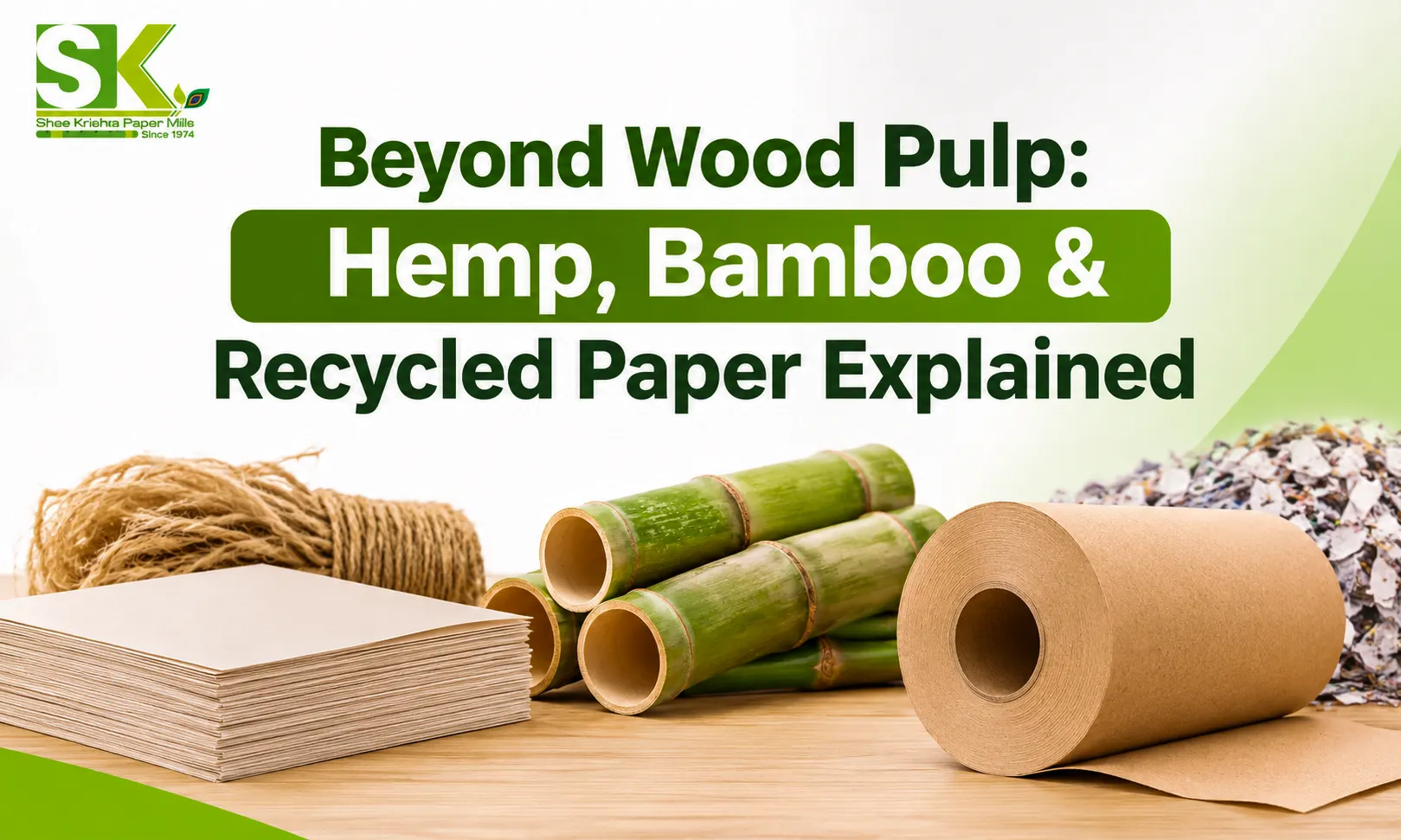
Have you ever wondered where the paper used in your notebooks or shopping bags actually comes from? Most traditional paper is made using wood Pulp but that is not the only option available. Businesses today have several alternatives to choose from. Hemp paper, bamboo paper, and recycled paper are becoming popular choices for those who want to use different raw materials and reduce the dependence on fresh wood pulp. But here is where things can get a little confusing. Health and bamboo are often known as tree-free papers, while PCW paper is made from paper that has already been used and recycled. They might be considered alternatives to typical paper, but they are not made in the same way or serve exactly the same purpose.
What is the difference between hemp, bamboo, and PCW paper?
The easiest way to understand these 3 paper types is to look at where the raw materials come from. Hemp paper is made from fibres obtained from the hemp plant. Bamboo paper uses bamboo pulp, while PCW paper is produced using waste paper collected after people or businesses have used it. For example an old office document that goes into a recycling bin can eventually become part of your new paper product. That’s essentially how PCW paper gets its raw material.
What is tree-free paper?
When you hear the term tree-free paper you might assume it means just paper made without any plant material. Well, you need to know that tree-free paper means that wood pulp from trees is not used as the main fibre source. Instead, manufacturers use other materials like hemp, bamboo, or cotton. You can use this paper for different products, including workbooks, paper bags or packaging.
Hemp paper: Fibres and uses
Hemp has been used for making paper for centuries. The fibers are naturally strong and long, which makes them useful for producing durable paper products. One thing that makes it really interesting is that it can be used as an alternative to typical wood pulp. Depending on how the fibers are processed, hemp paper can have a slightly different texture and appearance from regular paper.
Some common uses include:
- Packaging: Suitable for certain paper bags, wrapping materials and specialty packaging.
- Stationery: Used for notebooks, cards and writing paper.
- Printing: Can be used for selected printed materials, depending on its finish and quality.
Bamboo paper
Bamboo is another plant that has found its place in the paper-making industry. Unlike trees, bamboo is a fast-growing grass, and the fibers can be processed into pulp for making paper. The manufacturing process is quite simple. Bamboo is harvested, cut into smaller pieces and processed to separate the fibers. It can have a smooth finish and is available in different thicknesses and grades. You can generally say it’s an alternative because it grows relatively quickly. But the manufacturing process didn’t matter. Water consumption and transportation chemicals all influence the overall environmental impact
You may find bamboo paper being used for:
- Notebooks and writing pads.
- Printing paper and brochures.
- Paper bags and packaging.
- Tissue products and specialty paper items.
What is PCW paper?
If your office has a collection of old printouts or unwanted documents, instead of sending all that paper to a landfill, it can be collected and sorted to make new paper. That is exactly where PCW comes in. PCW stands for post-consumer waste. It refers to paper made using materials that have already been used by consumers or businesses and then collected for recycling.
Here are a few common applications:
- Office printing and photocopying paper.
- Paper bags and shopping bags.
- Notebooks and stationery.
- Product packaging and cartons.
- Marketing materials and brochures.
Hemp vs Bamboo vs PCW Paper: Key Differences
Comparison | Hemp Paper | Bamboo Paper | PCW Paper |
Main material | Hemp plant fibres | Bamboo fibres | Used paper products |
Paper category | Tree-free paper | Tree-free paper | Recycled paper |
Fibre source | Alternative plant fibre | Alternative plant fibre | Recovered paper fibre |
Fibre strength | Naturally strong fibres | Depends on pulp quality | Depends on recycled fibre quality |
Main benefit | Reduces reliance on wood pulp | Uses a fast-growing plant | Reuses existing paper |
Common uses | Specialty paper, stationery, packaging | Printing, stationery, packaging | Office paper, bags, packaging |
Environmental consideration | Farming and processing methods | Cultivation and processing methods | Collection, sorting and recycling |
Hemp vs Bamboo vs PCW Paper: Key Differences
This is exactly where many buyers get confused. If both options help reduce dependence on traditional Wood pulp, which is actually better? Well, it all depends on what you are trying to achieve. Tree-free paper uses materials like hemp and bamboo instead of typical wood pulp. Recycled paper, on the other hand, makes use of existing paper rather than just depending entirely on fresh raw materials. But if your business wants to use recovered materials and reduce the demand for virgin paper fibers PCW paper could be your best bet.
How to choose the right paper for your application?
Before ordering paper, think about what you actually need it for. The paper used for a shopping bag might not be suitable for a brochure or a notebook. For packaging, you need to look at thickness or folding ability. You want paper that can handle the weight and use of the product. For printing, you can check the surface finish, brightness, and ink absorption. When it comes to stationery, you need to consider how the paper feels when writing on it. Smoothness and texture all matter. If you want your packaging or stationery to reflect your brand’s sustainability efforts, check the material composition and available certifications.
What should you check for ordering tree-free or recycled paper?
If you are purchasing paper in bulk, it’s always good to ask a few questions before placing an order. A product description might tell you what the paper is made from but you still need to understand its quality.
Check the fiber composition: You must ask whether the paper is made from hemp or bamboo. This will help you understand exactly what you are buying.
Ask about recycled content: If you specifically need PCW paper, confirm the percentage of post-consumer waste used. Don’t assume that all recycled paper contains 100% post-consumer fibers.
Request samples before ordering: It’s very important for packaging and printing applications. You need to check the paper’s texture, thickness, appearance and performance before placing a large order.
Look for element certifications: Depending on your requirements, check for certifications.
Compare quality and pricing: Ask about GSM strength, printing compatibility and consistency between batches. A lower price might look attractive but the paper should meet your actual requirements.
Conclusion
Hemp bamboo and PCW paper might sound similar when you are looking for alternatives to traditional paper but each has something different to offer. Hemp and bamboo use plant-based fibers that don’t come from trees, while PCW paper gives previously used paper another purpose. Your choice depends on what you are making, the quality you need and the materials you want to use. If you are sourcing paper for packaging printing or stationery take the time to compare the available options. Look beyond the labels and check samples before placing your order