The demand for baking paper has grown steadily with the expansion of bakeries, food processing units, and packaged food industries. As businesses focus more on hygiene, efficiency, and consistent baking results, baking paper has become an essential material in commercial kitchens and large-scale food production. Since baking paper comes into direct contact with food, maintaining high quality and safety standards is extremely important.
Poor-quality paper can cause sticking, burning, or contamination, which may affect food quality and production efficiency. For this reason, businesses must carefully evaluate Baking Paper Manufacturers before selecting a supplier. This article explains the key factors that help identify reliable manufacturers, focusing on product quality, safety compliance, and sustainable production practices.
What Is Baking Paper and Why It Is Important in Food Preparation
Definition of Baking Paper
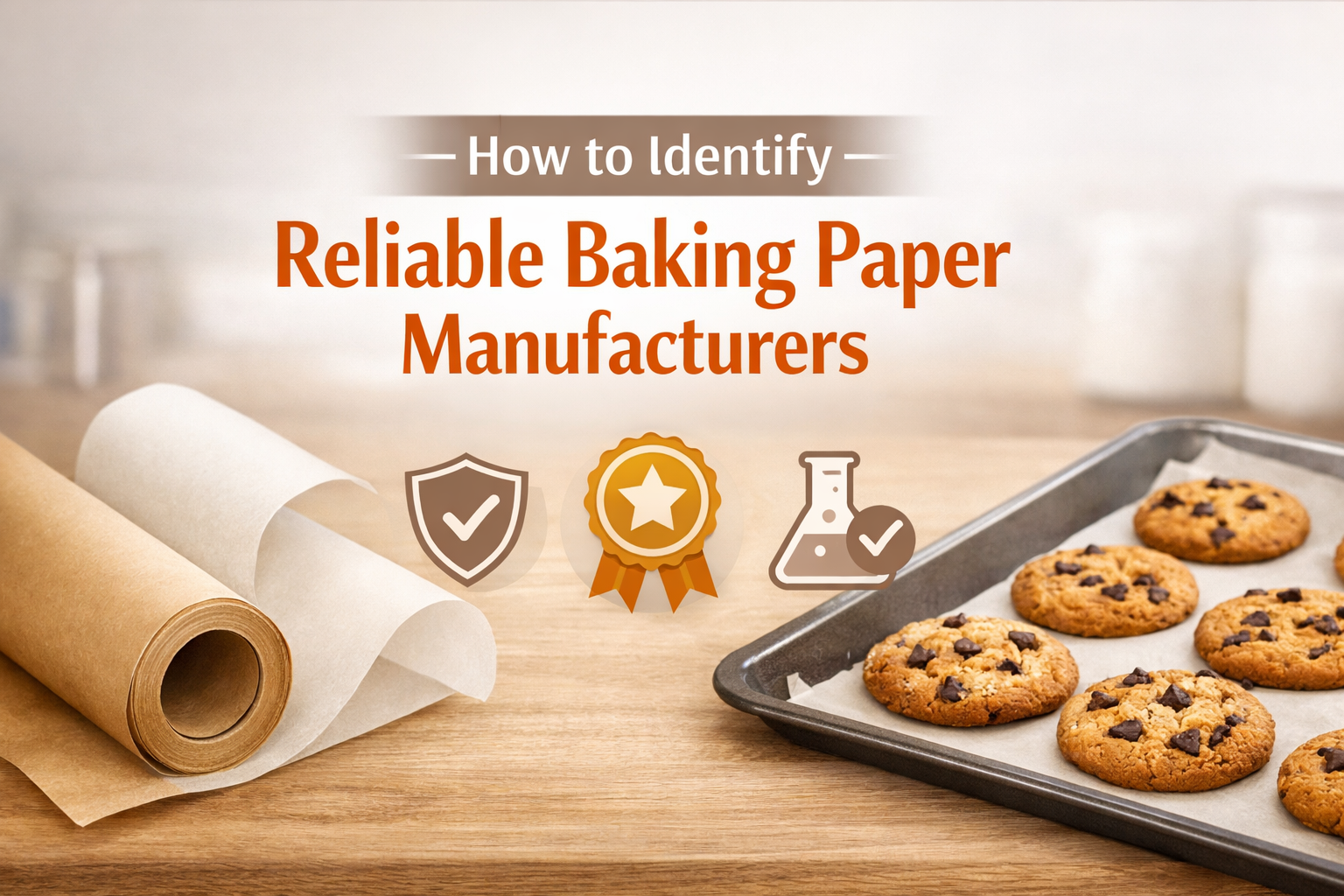
Baking paper, also known as parchment paper, is a cellulose-based paper designed to be non-stick, grease-resistant, and heat-resistant. It is manufactured using refined wood pulp fibers that provide strength and flexibility. The paper is then treated or coated to enhance its performance, making it suitable for high-temperature baking environments.
According to food packaging material standards, parchment paper is widely used because it can withstand oven heat while preventing food from sticking to surfaces.
Common Applications
Baking paper is used across multiple food preparation and packaging activities.
Baking Cookies and Cakes
Baking paper is widely used to line trays when baking cookies, cakes, pastries, and biscuits. It prevents sticking and supports uniform baking.
Lining Baking Trays
Professional kitchens and bakeries line trays with baking paper to reduce cleaning time and improve efficiency.
Air Fryer Cooking
With the growing use of air fryers, baking paper is now commonly used to prevent food residue from sticking to baskets.
Food Wrapping
Grease-resistant baking paper is often used for wrapping baked items such as pastries and sandwiches to maintain hygiene and freshness.
Commercial Bakery Production
Industrial bakeries rely on baking paper to support large-scale production. It helps maintain consistency and reduces production waste.
Raw Materials Used in Baking Paper Manufacturing
The quality of baking paper depends heavily on the raw materials used during production.
Virgin Wood Pulp
The primary raw material used in baking paper is refined virgin wood pulp, which contains cellulose fibers. These fibers provide structural strength and flexibility.
Virgin pulp is preferred because:
- It produces clean and uniform sheets
- It maintains consistent thickness
- It reduces contamination risks
- It improves strength and durability
Food-grade paper manufacturers often use virgin pulp instead of recycled pulp to ensure higher purity levels required for food-contact materials.
Silicone Coating
Most baking paper includes a food-grade silicone coating that provides non-stick properties.
Food-grade silicone is widely used because it:
- prevents food from sticking
- withstands high temperatures
- improves grease resistance
- remains chemically stable during baking
Silicone coatings are commonly approved for food-contact applications due to their heat stability and safety characteristics.
Greaseproof Treatment
Greaseproof treatments improve resistance to oil and moisture.
This treatment helps:
- prevent oil leakage
- maintain food structure
- improve packaging performance
- enhance durability
Grease resistance is especially important when baking products containing butter or oils.
How Baking Paper Is Manufactured
The manufacturing process involves several controlled steps designed to ensure quality and safety.
Pulp Preparation
The process begins by refining wood pulp into a uniform mixture.
During this stage:
- impurities are removed
- fibers are processed
- moisture levels are controlled
This ensures consistency in the final paper.
Paper Sheet Formation
The refined pulp is spread onto industrial paper machines to form thin sheets.
This step involves:
- removing water
- interlocking fibers
- controlling thickness
Uniform structure ensures consistent performance.
Parchmentizing Process
Many baking papers undergo a parchmentizing process, which improves strength and grease resistance.
This treatment:
- increases paper density
- improves durability
- reduces porosity
- enhances surface smoothness
These improvements support better baking results.
Silicone Coating Application
After base sheet formation, silicone coating is applied.
This step:
- creates non-stick surfaces
- improves heat resistance
- supports grease resistance
Consistent coating thickness is essential for reliable performance.
Quality Testing
Before packaging, baking paper undergoes multiple quality checks.
Common tests include:
- heat resistance testing
- grease resistance testing
- coating uniformity testing
- safety compliance testing
These tests confirm that the product meets performance standards.
Key Quality Features of a Trusted Baking Paper Manufacturer
Heat Resistance
Most baking papers are designed to withstand temperatures of approximately 220°C (428°F), which is suitable for common baking applications.
Poor heat resistance can lead to:
- burning
- smoke generation
- food quality issues
- safety risks
Reliable manufacturers test temperature tolerance under controlled conditions.
Non-Stick Surface
A consistent non-stick surface is achieved through proper silicone coating.
This feature helps:
- maintain product shape
- reduce waste
- minimize oil usage
- improve cleaning efficiency
Uniform coating quality is essential for performance.
Grease and Moisture Resistance
Grease resistance prevents oil leakage and maintains hygiene.
This property helps:
- protect baking trays
- support clean presentation
- maintain food quality
Reliable manufacturers test grease resistance to confirm performance.
Paper Strength and Durability
Strong baking paper prevents tearing during baking operations.
Durability supports:
- safe handling
- consistent baking
- reduced product waste
Manufacturers typically measure strength using standardized testing methods.
Food Safety Standards Baking Paper Manufacturers Must Follow
Food Contact Material Regulations
Food-contact materials must meet strict regulatory requirements.
Examples include:
- EU Regulation EC 1935/2004, which ensures materials do not release harmful substances into food
- FDA Food Contact Material guidelines, which regulate safety standards for food-contact materials
These regulations help protect consumer health.
Industry Certifications
Trusted manufacturers often obtain internationally recognized certifications.
Common examples include:
ISO 9001 — Quality Management Systems
Ensures standardized production and quality management.
ISO 22000 — Food Safety Management
Focuses on food safety processes and risk management.
These certifications indicate structured manufacturing practices.
Chemical Safety Compliance
Reliable manufacturers avoid harmful chemicals and use safe coatings.
They perform:
- chemical safety testing
- compliance checks
- controlled material selection
This ensures food safety and regulatory compliance.
Types of Baking Paper Produced by Manufacturers
Silicone-Coated Baking Paper
Most widely used type.
Applications:
- baking cookies
- roasting vegetables
- lining trays
Provides strong non-stick performance.
Greaseproof Paper
Used mainly for packaging and wrapping.
Applications:
- wrapping baked goods
- sandwich packaging
- food storage
Offers oil resistance but may not always include silicone.
Baking Paper Rolls
Common in commercial environments.
Advantages:
- flexible sizing
- reduced waste
- efficient use
Widely used in bakeries.
Pre-Cut Baking Paper Sheets
Ready-to-use sheets.
Advantages:
- time-saving
- consistent size
- improved workflow
Common in restaurants and catering operations.
Technical Specifications Buyers Should Check
Paper GSM (Thickness)
GSM measures paper weight and thickness.
Higher GSM typically means:
- stronger paper
- improved durability
- better performance
Choosing the correct GSM depends on the application.
Heat Resistance Range
Heat resistance determines performance under oven temperatures.
Most baking paper withstands up to around 220°C.
Selecting suitable temperature limits prevents damage.
Silicone Coating Quality
Uniform coating improves:
- non-stick performance
- durability
- consistent baking results
Poor coating can cause sticking issues.
Grease Resistance Level
High grease resistance:
- prevents oil penetration
- supports clean operations
- protects trays
Testing methods confirm grease resistance levels.
Sustainability Practices in Modern Baking Paper Manufacturing
Environmental responsibility is becoming increasingly important in the packaging industry.
Sustainable Wood Pulp Sourcing
Responsible manufacturers source wood pulp from certified forestry programs such as responsibly managed forests.
This supports:
- forest conservation
- responsible harvesting
- long-term sustainability
Environmentally Friendly Production
Modern facilities aim to reduce:
- water usage
- chemical waste
- energy consumption
These improvements reduce environmental impact.
Recyclable or Biodegradable Baking Paper
Some baking papers are designed to support recycling or composting depending on coating and treatment methods.
Demand for eco-friendly packaging continues to grow globally.
How to Evaluate and Choose a Reliable Baking Paper Manufacturer
Check Industry Certifications
Verify whether the manufacturer holds certifications such as ISO quality or food safety standards.
These certifications indicate controlled manufacturing processes.
Review Manufacturing Experience
Experienced manufacturers typically:
- maintain stable production
- understand industry requirements
- provide consistent product quality
Production history often reflects reliability.
Evaluate Product Quality Consistency
Ask for product samples and test them under real conditions.
Consistency in performance is a key indicator of reliability.
Assess Production Capacity
Large-scale production capability ensures timely delivery.
Reliable supply chains are essential for commercial operations.
Look for Customization Options
Some manufacturers offer:
- custom sheet sizes
- roll lengths
- packaging formats
Customization supports operational flexibility.
Questions to Ask Before Choosing a Baking Paper Manufacturer
Businesses should ask important technical questions before selecting a supplier.
Examples include:
- What raw materials are used in your baking paper?
- What temperature resistance does the paper offer?
- Do you provide food-grade certification?
- What quality testing methods are used?
- What is the paper GSM range available?
- Can you provide product samples for testing?
These questions help evaluate supplier reliability.
Role of Baking Paper Manufacturers in the Food Packaging Industry
Baking paper manufacturers play an important role across multiple industries.
They support:
- commercial bakeries
- food processing companies
- restaurant kitchens
- food packaging businesses
Reliable supply ensures efficient operations and safe food preparation.
Future Trends in Baking Paper Manufacturing
The baking paper industry continues to evolve with changing market demands.
Key trends include:
Sustainable Paper Packaging
Growing environmental awareness is increasing demand for sustainable packaging materials.
Eco-Friendly Coatings
Manufacturers are developing coatings designed to reduce environmental impact while maintaining performance.
Rising Demand from Bakery Industries
The growth of bakery chains and packaged foods continues to drive demand for high-quality baking paper.
Conclusion
Choosing a trusted baking paper manufacturer is essential for maintaining product quality, food safety, and operational efficiency. Because baking paper comes into direct contact with food, businesses must carefully evaluate raw materials, manufacturing processes, quality features, and safety certifications before selecting a supplier.
Important factors such as heat resistance, non-stick performance, grease resistance, and paper strength directly affect baking results and production reliability. In addition, sustainability practices and compliance with food safety standards are becoming increasingly important in modern packaging industries.
By understanding these technical and quality considerations, businesses can confidently select manufacturers that deliver consistent performance and safe food-contact materials.
Frequently Asked Questions
What is baking paper made of?
Baking paper is primarily made from refined wood pulp fibers and treated with greaseproof processes or silicone coatings to improve non-stick and heat-resistant properties.
Is baking paper safe for food use?
Yes, baking paper is safe when manufactured according to food-contact material regulations and approved safety standards.
What temperature can baking paper withstand?
Most baking papers are designed to withstand temperatures of approximately 220°C, depending on product quality and specifications.
What is the difference between baking paper and parchment paper?
Baking paper and parchment paper are generally the same product. Both are cellulose-based papers treated to be non-stick and heat-resistant for baking applications.