Have you ever wondered how colorful designs are printed on polyester t-shirts , sports jerseys, and cushions without the design peeling off after a few washes? Sublimation printing is one of the methods used to achieve this result. It is a popular textile printing process because it allows colours and detailed designs to become part of the material rather than just simply sitting on the surface. But getting a good result depends on more than just having the right printer. The ink transfer paper, fabric and pressure all play a very important role.
This is exactly where sublimation printing paper becomes important. It holds the printed design before transferring the colour onto the fabric under heat. The right paper helps control ink release and produce consistent results.
What is sublimation printing?
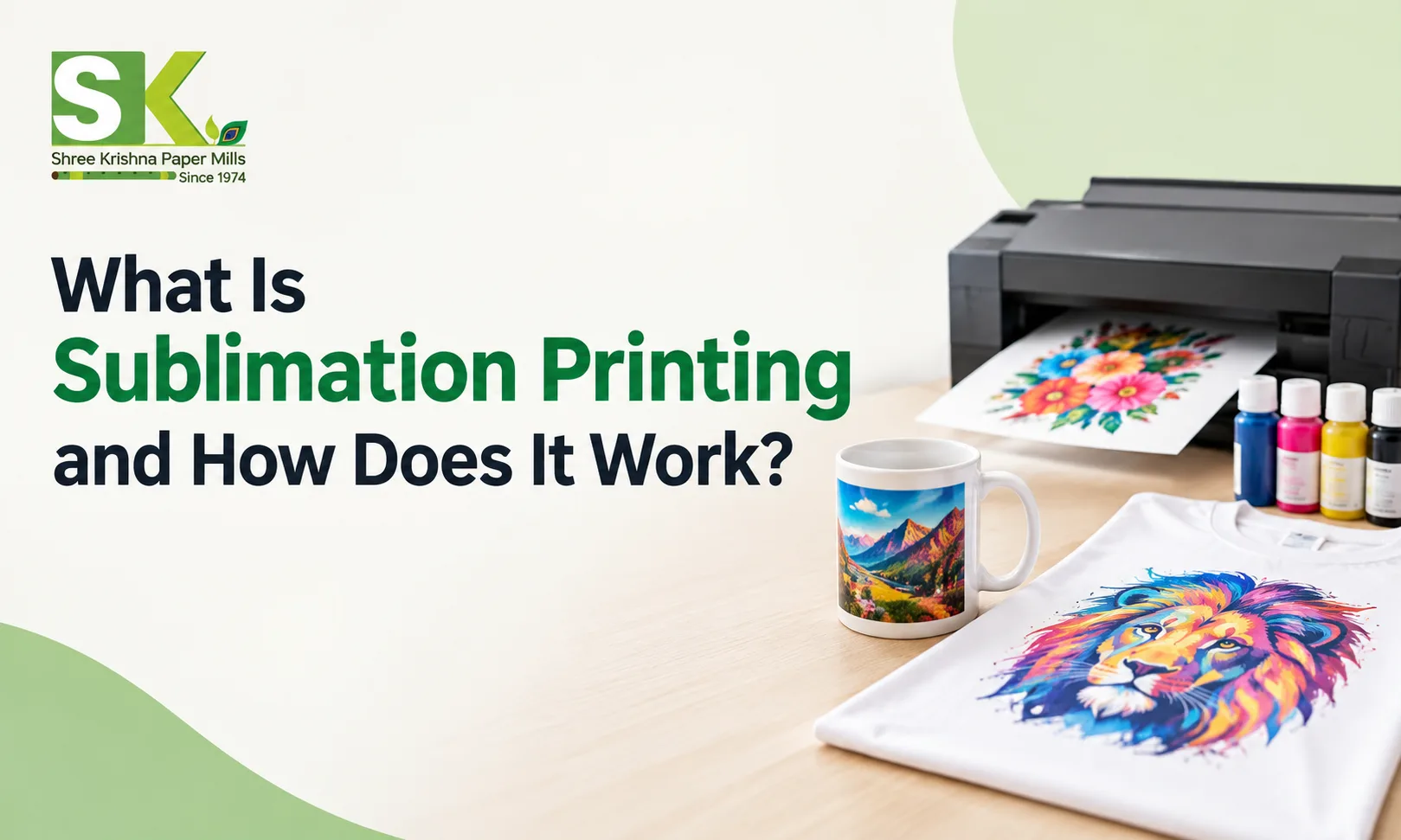
Dye sublimation printing is also known as sublimation printing. It is a printing process that uses a special ink and heat to transfer the design to a suitable material. It can generally be used on polyester fabrics and products with a compatible polymer coating. The process begins with printing or design onto transfer paper using sublimation ink. The printed paper is then placed against the fabric or coated surface.
When the heat is applied, the dye changes into a gas and also enters the polyester or polymer materials. As it cools the dye becomes trapped within the material. This creates a print that feels like part of the fabric rather than just separate layers sitting on top. Sublimation printing is completely used for sportswear flags cushion covers and promotional products. It is useful when a design contains multiple colors and gradients.
How is sublimation printing different from conventional heat transfer printing?
Although both the methods use heat to apply a design the way the image attaches to the material itself is different. With sublimation printing the dye enters the polyester fiber or compatible polymer coating. With many conventional heat transfer methods the design is carried by a transfer layer like printed film or heat transfer vinyl that attaches to the surface. The difference affects the final feel and materials you can use. Sublimation printing works best on white or light colored polystyrene because the process does not provide an opaque white and clear.
How does sublimation printing work?
Create the design and print it
The process starts with creating the artwork on a computer. You can use photographs or logos or other graphics depending on the product that you are making. The design is printed onto sublimation transfer paper using a compatible printer. The artwork is usually mirrored before printing when the design needs to appear correctly oriented after transfer. It is important for text logos and designs containing letters.
Prepare the fabric
Once the design is printed the fabric needs to be prepared for transfer. Polyester is preferred material because sublimation dyes bond effectively with the fiber. Before printing the fabric should be clean and dry without dust or unwanted moisture that could interfere with transfer. It is also important to check fabric heat tolerance. Some materials might shrink or become distorted when exposed to high temperatures. If you are printing on polyester blend the polyester content matters.
Transfer the design using heat and pressure
The printed paper is placed against the fabric with the printed side facing the material. A heat press applies control temperature pressure and time to transfer the design. The settings depend on the fabric and the equipment being used. Too little heat or insufficient transfer time can cause pale colours or incomplete transfer. Excessive heat or prolonged processing can cause colour shifts or fabric damage. So you need to follow recommendations for your specific materials rather than just relying on one setting.
Sublimation and colour transfer
When the paper reaches the required temperature the sublimation dye turns into gas. The heat opens up the polyester fibers sufficiently for the dye to enter the material. As the fabric cools the dye becomes embedded within the fibers producing the final stage. The transfer paper is then removed leaving the design on the fabric. When the correct materials and settings are used the print can have a smooth feel and good resistance to cracking or peeling because there are no typical surface films forming the image.
What is sublimation printing paper?
Sublimation printing paper special design transfer paper used to carry sublimation ink from a printer to the final material. Unlike ordinary paper it has a surface designed to manage the ink during printing and release the dye effectively when heat is applied. Its coating helps control how the ink spreads, how quickly the paper dries and how much dye transfers to the fabric. The paper itself is not intended to become part of the finished product but its job is to hold the image until the heat press transfers the dye onto the material.
Why can't you use ordinary paper for sublimation printing?
Ordinary printing paper is not designed for the same ink release requirements. It might absorb too much ink into the fibers resulting in less efficient transfer. The design might also dry unevenly or lose detail depending on the paper and ink. Sublimation paper is designed to retain the ink near the surface and release it during heat transfer. This helps improve colour and maintain the details of the printed design.
Types of sublimation printing paper
Not every sublimation job requires the same paper. Different paperweights and formats are available to suit the printer production speed and material being printed.
Lightweight sublimation paper
Lightweight sublimation papers are generally used for applications where a thinner sheet is suitable for the printer and transfer process. It might be useful for certain textile production and application setups where efficient handling is very important. But lighter paper is not automatically better for every job. Performance depends on paper type and stability.
Standard weight sublimation paper
Standard weight sublimation paper is commonly used for everyday textile transfer work. It offers balance between handling ink retention drying and transfer performance. It might be suitable for personalized apparel or sportswear. The best weight depends on manufacturer specifications and job requirements.
Sublimation paper for high speed printing
Sublimation papers are designed for production environments where printers operate at higher speeds or print large volumes. These papers need to manage ink effectively while maintaining dimensional stability and drying performance. If the paper dries too slowly the printed design might smudge during handling or winding. For commercial textile printing paper compatibility becomes especially important because even small inconsistencies can affect a larger batch of fabric.
Key sublimation paper specifications to check
When comparing products you need to ensure that the paperweight is just one part of the decision. The drying behavior, compatibility and ability to release ink are equally important.
Sublimation paper GSM and thickness
Gsm stands for grams per square metre and it measures the weight of the paper over a standard area. Sublimation paper GSM is available in different GSM grades to suit various printers and transfer applications. A heavier sheet might be easier to handle in some situations while a lighter sheet might suit a different production setup. 2 papers with the same GSM can behave differently because of their coatings and fiber structures.
Sublimation paper coating
The coating is one of the most important parts of sublimation paper. It helps control the movement of ink into the paper and it’s released during heat transfer. A suitable coating can help reduce ink spreading and maintain sharp details. If the coating is poor or suitable for the ink system you might notice uneven prints or blurred edges.
Dyeing performance
After printing the ink needs to dry sufficiently before the paper is handled or transferred. The required drying time depends on the factors like ink volume and paper coating. If the paper remains wet the ink might smear or even transfer to unwanted areas. This can affect the final details and create marks on the fabric.
Moisture control and dimensional stability
Paper can absorb moisture from surrounding areas. Changes in moisture content might cause it to expand or become less stable during printing. This is important when printing detailed designs or long patterns that require accurate positioning. Store sublimation paper in its original packaging when possible and protected from excessive humidity.
Sublimation paper quality and printer compatibility
Good quality sublimation paper should feel reliably hold the printed image without excessive spreading and release the dye effectively during transfer. It should also be compatible with the printer ink and production process. Before purchasing in bulk, check whether the paper is suitable for your Printer model.
Which fabric works best for sublimation printing?
The fabric plays a very important role in the final print quality. Even the best sublimation paper cannot compensate for a material that is unsuitable for the process.
Sublimation printing on polystyrene fabric
Polyester is the preferred fabric for sublimation printing because the dye bonds with its fibers during heat transfer. It is widely used for active wear and sports jerseys besides other textile products that require colorful designs. Sublimation printing on polyester can produce detailed images without creating a thick printed layer on the surface. It is one of the main reasons that makes it popular for sportswear where the feel and flexibility of the fabric matter.
Can you use sublimation paper on cotton fabric?
Standard sublimation printing does not work directly on untreated cotton the same way it works on polyester. The dye is designed to bond with polyester fibers so design transfer directly onto cotton might appear weak and might not retain its colour well through washing. If you need to print on cotton you need a compatible polymer coated surface or a different transfer method specifically for cotton fabrics. For polyester blends the result depends on the blend ratio. A fabric containing both polyester and cotton prints show a less vibrant image than 100% polyester fabric because the dye bonds primarily with the polyester portion.
What affects sublimation print quality
If a design looks faded or uneven after transfer the problem might not be caused by one factor alone.
Paper quality
The paper must retain the ink during printing and release it effectively during transfer. Poor coating quality or unsuitable paper can reduce colour transfer and also affect the image sharpness.
Sublimation ink and ink transfer
Sublimation ink is especially formulated for the dye transfer process. Ink quality and printer compatibility can affect the final result. Using an incompatible ink and paper combination might lead to inconsistent colour reproduction and transfer problems. The amount of ink used also matters. Excessive ink can increase the drying time and might affect the transfer.
Paper and fabric compatibility
The fabric ink and paper must be suitable for the same process. For example a paper design for a particular textile printing setup might not perform equally well with every ink system or printer. Similarly a fabric with low polyester content might not produce the same colour intensity as suitable polyester fabric. You must always consider the complete printing setup rather than just choosing each component separately.
Temperature pressure and transfer time
Temperature pressure and time determine how effectively the dye transfers from the paper to the fabric. There is no single temperature or pressing time that works for every sublimation job. Insufficient heat or time might cause incomplete transfer. Excessive heat or time can create colour changes or damage to the fabric. You need to follow the recommendations for your materials and test the settings before starting a large production run.
Colour management and printer settings
The colors displayed on a computer screen might not match the colors produced on the fabric automatically. Printer settings, colour profiles and ink characteristics all influence the final appearance. Proper color management workflow can help make the results more predictable.
How to choose the right sublimation paper?
With so many options available it helps to start with your equipment and intended application rather than selecting a product based on price alone.
Match the paper with your printer and ink: Check the printer model supported paper format and recommended media.
Compare GSM and thickness: You need to choose a paper weight that feeds properly and remains stable during printing and transfer. You should not assume higher GSM will automatically give better results.
Check the coating and drying performance: The requirements for sportswear Might differ from those for flags or cushion covers. You need to confirm that the fabric is suitable for sublimation.
Evaluate ink release and colour transfer: If possible, request samples and compare colour intensity and consistency after transfer.
Check storage and handling requirements: Paper that is exposed to unsuitable humidity or poor storage conditions might not perform as expected.
Common sublimation printing applications
Sublimation printing is used across clothing home textiles, promotional products and printed displays.
Apparel and sportswear: Polyester sportswear is one of the most common applications. Team jerseys, running shirts and active wear can feature names, numbers or logos. Because the dye enters the polyester fabrics the finish print does not have the same feel as many surface applied transfers.
Home and interior textiles: Sublimation printing is also used for selected polyester cushion covers and decorative fabrics. The choice of fabric and paper affects the final appearance especially when the design includes photographs or detailed patterns.
Promotional textiles: You can use sublimation printing for suitable bags, branded clothing and personalized tactical gifts. It’s especially useful for multicolour designs and small batches where different names and graphics might be required.
Flags banners or soft signage: Polyester fabrics used for flags, banners and display graphics can be printed using sublimation. For these applications, increasing colour consistency and production speed become important, especially for large designs or long runs.
Conclusion
Sublimation printing is one of the best ways to create bright detailed designs on polystyrene fabrics and specially coated products. But getting the print right is not just about choosing a good ink or having the right printer. The paper you use also makes a big difference. Sublimation printing paper holds the design after printing and helps transfer the ink onto the material when heat is applied. To choose the right paper you need to consider your printer and ink compatibility, the type of fabric you are using and how quickly the paper releases the ink during heat transfer.
For example, printing sportswear might require different paper performance than just printing questions or other home textile products. Before placing a bulk order you can try a few samples and check the colour quality or sharpness.