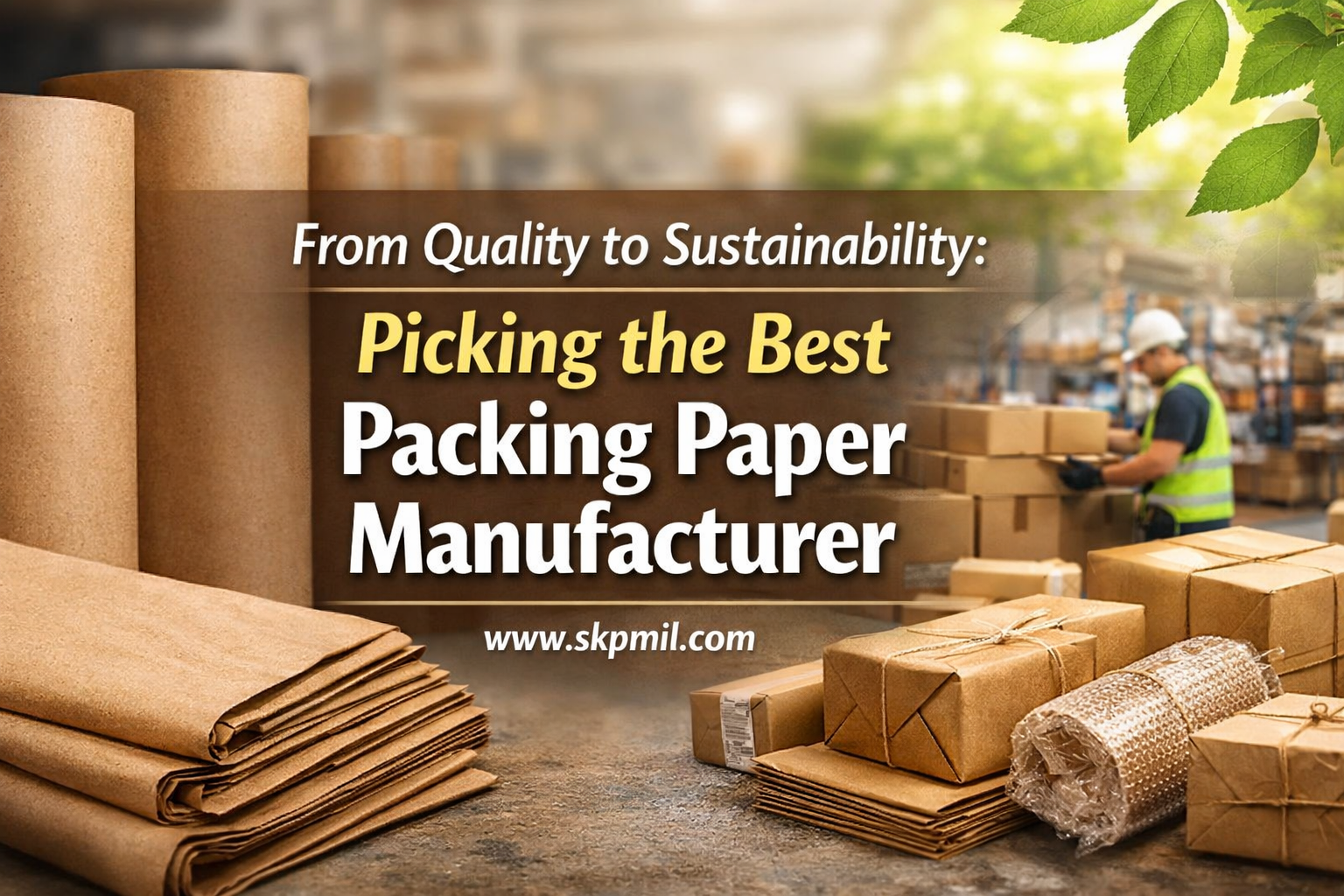
Packing paper has become an essential component in today’s packaging and shipping industry. Whether it’s for e-commerce shipments, industrial goods, or retail products, packing paper ensures that items reach customers safely and securely. With the rapid growth of online shopping and logistics networks, demand for reliable packing paper has surged.
At the same time, there is a clear shift from plastic-based packaging to recyclable, paper-based materials, driven by sustainability concerns. This makes choosing the right packing paper manufacturers crucial not just for quality and strength, but also for eco-friendly and consistent supply solutions.
What Is Packing Paper?
Packing paper is a type of paper specifically designed to protect products during storage, handling, and transportation. It can be made from virgin pulp derived from wood or from recycled fibers, making it both versatile and environmentally conscious.
Key properties that make packing paper suitable for packaging include:
- Durability: It withstands rough handling and pressure during transit.
- Flexibility: It can wrap around items of various shapes and sizes.
- Recyclability: It can be reused or recycled, reducing environmental impact.
By providing cushioning and structural support, packing paper plays a critical role in reducing product damage and enhancing overall customer satisfaction.
Types of Packing Paper Produced by Manufacturers
Kraft Packing Paper
Kraft packing paper is made using the kraft pulping process, which produces a strong, tear-resistant material. It is widely used for industrial packaging, shipping cartons, and protective wrapping due to its durability and toughness.
Recycled Packing Paper
Produced from recycled fiber, this paper is a cost-effective and eco-friendly alternative. It helps businesses reduce waste while maintaining packaging quality, making it ideal for sustainable supply chains.
Wrapping and Cushioning Paper
This type of packing paper is primarily used for protecting fragile products such as glassware, electronics, and delicate items during transport. It is a staple in e-commerce logistics, where safeguarding customer orders is a priority.
Specialty Packaging Paper
Specialty papers include coated, food-grade, or high-performance packaging paper designed for industry-specific applications. Examples include moisture-resistant sheets for food packaging or printed papers for branding and retail purposes.
Technical Specifications That Define High-Quality Packing Paper
GSM and Paper Thickness
GSM (grams per square meter) measures paper density. A higher GSM typically indicates stronger, thicker paper suitable for heavy-duty packaging, while lower GSM is used for wrapping lightweight items. Choosing the correct GSM ensures the right balance between protection and cost-efficiency.
Burst Strength and Tear Resistance
These measures indicate a paper’s ability to withstand pressure and rough handling. High burst strength and tear resistance are essential for industrial and shipping applications to prevent product damage.
Cobb Value and Moisture Resistance
Cobb value measures the paper’s water absorption level. Low absorption (better moisture resistance) is critical for packaging items sensitive to humidity, such as electronics, pharmaceuticals, or food products.
Surface Finish and Printability
A smooth surface and quality coating allow for branding, labeling, and high-resolution printing on packaging. This is particularly important for retail products where aesthetics matter.
How Packing Paper Is Manufactured?
Raw Material Selection
High-quality packing paper starts with premium wood pulp or recycled fibers. Manufacturers evaluate fiber strength, purity, and consistency to ensure the final paper meets industry standards.
Pulp Processing and Paper Formation
Pulp is processed and converted into paper sheets using advanced paper machines. The fibers are refined, blended, and formed into uniform sheets for further finishing.
Drying and Finishing
Sheets are pressed, dried, and treated to enhance strength, flexibility, and surface smoothness. This step ensures durability and suitability for industrial use.
Quality Testing and Inspection
Reliable manufacturers conduct rigorous quality testing on parameters like GSM, tensile strength, and tear resistance. This guarantees consistent product performance across large volumes.
Industries That Depend on Packing Paper Manufacturers
Packing paper serves a diverse range of industries:
- E-commerce and logistics: Protects shipped goods and fragile items during delivery.
- Food and beverage: Used for wrapping perishable products and takeaway packaging.
- Retail and shopping bags: Provides eco-friendly options for branded paper bags.
- Industrial and manufacturing: Supports heavy machinery, components, and bulk shipments.
- Fragile product packaging: Ensures safe transport of delicate items like glass, ceramics, and electronics.
Across industries, packing paper is increasingly preferred for its sustainability, recyclability, and protective qualities.
Key Factors to Consider When Choosing Packing Paper Manufacturers
Production Capacity and Infrastructure
Manufacturers with modern machinery and scalable production capabilities ensure timely delivery and consistent quality, even for bulk orders.
Raw Material Quality
Choosing between virgin pulp and recycled fibers depends on the product and sustainability goals. High-quality raw materials directly affect the paper’s strength and durability.
Certifications and Industry Standards
Look for manufacturers with certifications such as:
- FSC certification for sustainable forestry practices
- ISO quality standards for consistent product performance
- Food-grade compliance for packaging consumables
Customization and Product Range
A good manufacturer offers variety in GSM, paper grades, and types, allowing businesses to tailor packaging solutions to their needs.
Supply Reliability and Distribution Network
Reliable manufacturers maintain consistent supply chains and distribution networks to meet deadlines and bulk order requirements.
Sustainability Practices in the Packing Paper Industry
Eco-conscious practices are becoming a key differentiator:
- Using recycled fibers to minimize environmental impact
- Implementing responsible forestry practices
- Reducing plastic packaging reliance by providing biodegradable alternatives
- Meeting rising demand for recyclable and compostable paper solutions
Sustainable packing paper helps businesses align with global environmental standards while enhancing brand reputation.
Future Trends in Packing Paper Manufacturing
The industry is evolving rapidly with innovations such as:
- Lightweight yet strong paper that reduces shipping costs
- Increased use of recycled materials for eco-friendly packaging
- Automation and smart machinery to enhance efficiency and quality
- Growing global demand for sustainable and branded paper packaging solutions
Manufacturers investing in these trends are better positioned to meet future market needs.
Conclusion
Choosing a reliable packing paper manufacturer is vital for ensuring product safety, quality, and sustainability. Businesses must evaluate production capacity, raw material quality, certifications, customization options, and supply reliability before selecting a supplier.
With the increasing global emphasis on eco-friendly packaging, trusted manufacturers like SKPMIL provide not just durable and high-quality packing paper but also sustainable solutionsthat support long-term business growth.
Frequently Asked Questions
Q1: What is packing paper used for?
Ans: Packing paper protects goods during storage, handling, and shipping. It cushions fragile items, wraps products, and provides an eco-friendly alternative to plastic packaging.
Q2: What types of packing paper do manufacturers produce?
Ans: Manufacturers offer kraft paper, recycled packing paper, wrapping and cushioning paper, and specialty packaging paper for specific applications.
Q3: Is packing paper environmentally friendly?
Ans: Yes, especially recycled and eco-friendly paper. It is biodegradable, recyclable, and helps reduce plastic waste.
Q4: How do businesses choose reliable packing paper manufacturers?
Ans: Evaluate raw material quality, production capacity, certifications, product range, and supply reliability to ensure consistent and sustainable packaging.Q5: What industries use packing paper the most?
E-commerce, logistics, food and beverage, retail, industrial manufacturing, and fragile product packaging rely heavily on packing paper.