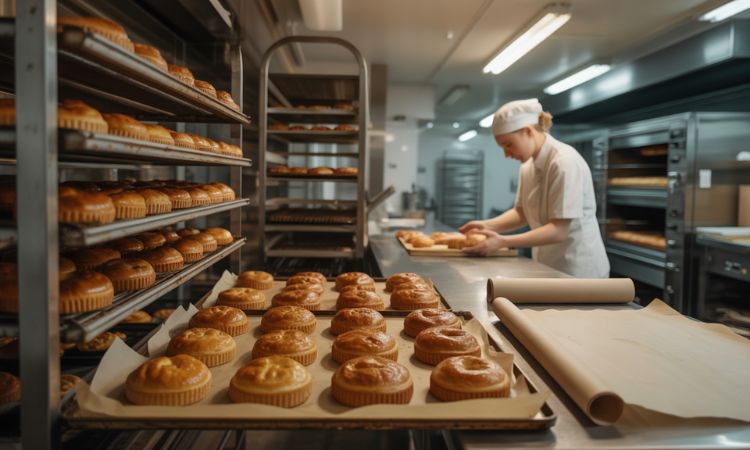
What Is Baking Paper?
At SKPMIL, we primarily use recycled paper fibers — reducing environmental impact while maintaining exceptional performance for baking and packaging applications.
Why Choosing the Right Baking Paper Matters for Commercial Bakeries
- Production efficiency: Prevents product sticking and tearing, reducing rework and downtime.
- Cost optimization: Minimizes paper wastage and maintains oven performance.
- Product appearance: Ensures even browning and clean product release.
- Food safety compliance: Meets FDA and FSSAI standards for food-grade packaging.
- Sustainability goals: Recyclable and biodegradable papers align with eco-friendly operations.
A poor-quality paper might save money initially, but it often leads to operational losses and inconsistent product quality — something commercial bakers cannot afford.
Key Factors to Consider When Selecting Baking Paper
1. Paper Type: Silicone-Coated vs. Non-Coated
Baking papers are generally classified into two main types:
Silicone-Coated Baking Paper
- Has a thin layer of food-grade silicone for excellent non-stick and heat-resistant properties.
- Ideal for repeated baking cycles or high-temperature ovens (up to 230°C).
- Commonly used for cookies, pastries, biscuits, and bread.
Non-Coated Baking Paper
- Made from specially refined pulp with natural resistance to grease and moisture.
- A cost-effective, eco-friendly alternative suitable for moderate-temperature baking.
- Works well for lining trays, wrapping, or packaging dry bakery products.
2. GSM (Grams per Square Meter)
GSM Range | Recommended Use |
35–45 GSM | Lightweight use (cookies, pastries, lining) |
46–55 GSM | Medium use (bread, buns, muffins) |
56–70 GSM | Heavy-duty use (industrial baking, oily or dense foods) |
Pro tip: For automatic bakery lines, consistent GSM ensures uniform baking and smooth paper feed into ovens.
SKPMIL offers custom GSM configurations tailored for different bakery applications.
3. Temperature Resistance
Baking papers must withstand oven temperatures between 200°C to 230°C without burning or curling.
Our silicone-coated variants maintain performance even after multiple bake cycles, making them suitable for high-speed industrial ovens.
Always test the paper’s heat stability before large-scale use — substandard papers may emit odor or discolor, affecting product quality.
4. Grease and Moisture Resistance
- Prevent oil seepage and surface staining
- Maintain crispness and freshness in baked goods
- Withstand direct contact with high-fat ingredients
This ensures a cleaner working environment and superior product presentation.
5. Food-Grade Certification and Compliance
For any bakery producing at scale, food safety certification is non-negotiable.
Look for baking papers that are:
- FDA approved for food contact
- FSSAI compliant
- ISO-certified for manufacturing and hygiene standards
- Chlorine-free (ECF/TCF) for chemical safety
SKPMIL’s manufacturing process follows strict quality controls and sustainability protocols, ensuring every roll meets international food packaging standards.
6. Roll or Sheet Format
- Rolls: For automatic or semi-automatic bakery lines; customizable core size and length.
- Sheets: Pre-cut for manual operations; ideal for small bakeries or specific tray sizes.
SKPMIL offers custom-cut sheets and rolls, ensuring seamless integration with your equipment and minimizing wastage.
7. Eco-Friendly and Sustainable Options
With sustainability now a key procurement factor, more bakeries are seeking environmentally responsible suppliers.
- Manufactured from 100% recycled fibers
- Biodegradable and compostable
- Free from plastic or harmful coatings
- Recyclable after use
By choosing recycled baking paper, your brand can reduce carbon footprint and appeal to eco-conscious consumers — without compromising performance.
Read More : Types of Packaging Paper & Their Uses across Industries
Customization Options for Food Brands and Bakeries
Every bakery’s needs are unique. That’s why we offer:
- Custom sheet sizes and roll widths
- Brand logo printing on baking paper for retail packaging
- Tailored GSM and coating levels
- Bulk supply options for export and domestic markets
Custom-printed baking paper not only protects your products but also reinforces your brand identity during retail display or delivery.
Market Insight: Rising Demand for Baking Paper in India
According to recent market studies, the Indian baking paper market is expected to grow by over 6% CAGR (2024–2030), driven by the expansion of bakery chains, frozen foods, and takeaway packaging.
With growing awareness about eco-friendly and food-safe packaging, baking paper manufacturers like SKPMIL play a crucial role in supplying sustainable, high-performance paper solutions to leading food brands in India and abroad.
Why Choose SKPMIL as Your Baking Paper Manufacturer?
With decades of experience in the paper and packaging industry, SKPMIL has established itself as a trusted partner for food packaging companies, bakeries, and converters.
Our strengths include:
- In-house production using recycled raw materials
- Advanced coating and refining technology
- Consistent quality and GSM uniformity
- Food-grade certifications (FDA, FSSAI, ISO)
- Bulk manufacturing capacity with nationwide and export supply
- Sustainable and eco-conscious production processes
We don’t just sell paper — we deliver performance, reliability, and sustainability in every roll.
Conclusion: The Right Baking Paper Means Better Business
Choosing the right baking paper for your commercial bakery isn’t just about performance — it’s about efficiency, compliance, and sustainability.
With SKPMIL’s wide range of food-grade, eco-friendly, and customizable baking papers, you can achieve:
- Consistent baking quality
- Reduced operational waste
- Enhanced brand presentation
- A smaller environmental footprint
If you’re a commercial bakery, food processor, or packaging supplier, let’s partner to bring reliable, sustainable baking solutions to your business.