Choosing kraft paper for packaging is not just about picking a heavier paper and assuming it will provide better protection. A paper grade that works well for a small carton might not be suitable for a heavy corrugated box or a product travelling across several cities. The right choice depends on what you are packing, how the packaging is made, and the conditions it will face during storage and transportation. That is the only reason why understanding kraft paper GSM for packaging is very important for manufacturers and packaging companies. GSM helps you compare paper weight, but it is not the only part of the specification. Burst factor, tear resistance and fibre quality all influence how well the final packaging performs.
Quick answer: which GSM kraft paper should you choose?
If you need a quick starting point, consider the intended application. For light products, a lower GSM might be sufficient for basic packaging requirements. For general shipping, you can look for a suitable balance of GSM and corrugated board construction. For heavy products, you can consider High Strength Unbleached Kraft Paper and an appropriate ply and flute combination. Always pay attention to the moisture content and finished board performance.
What does GSM mean in kraft paper?
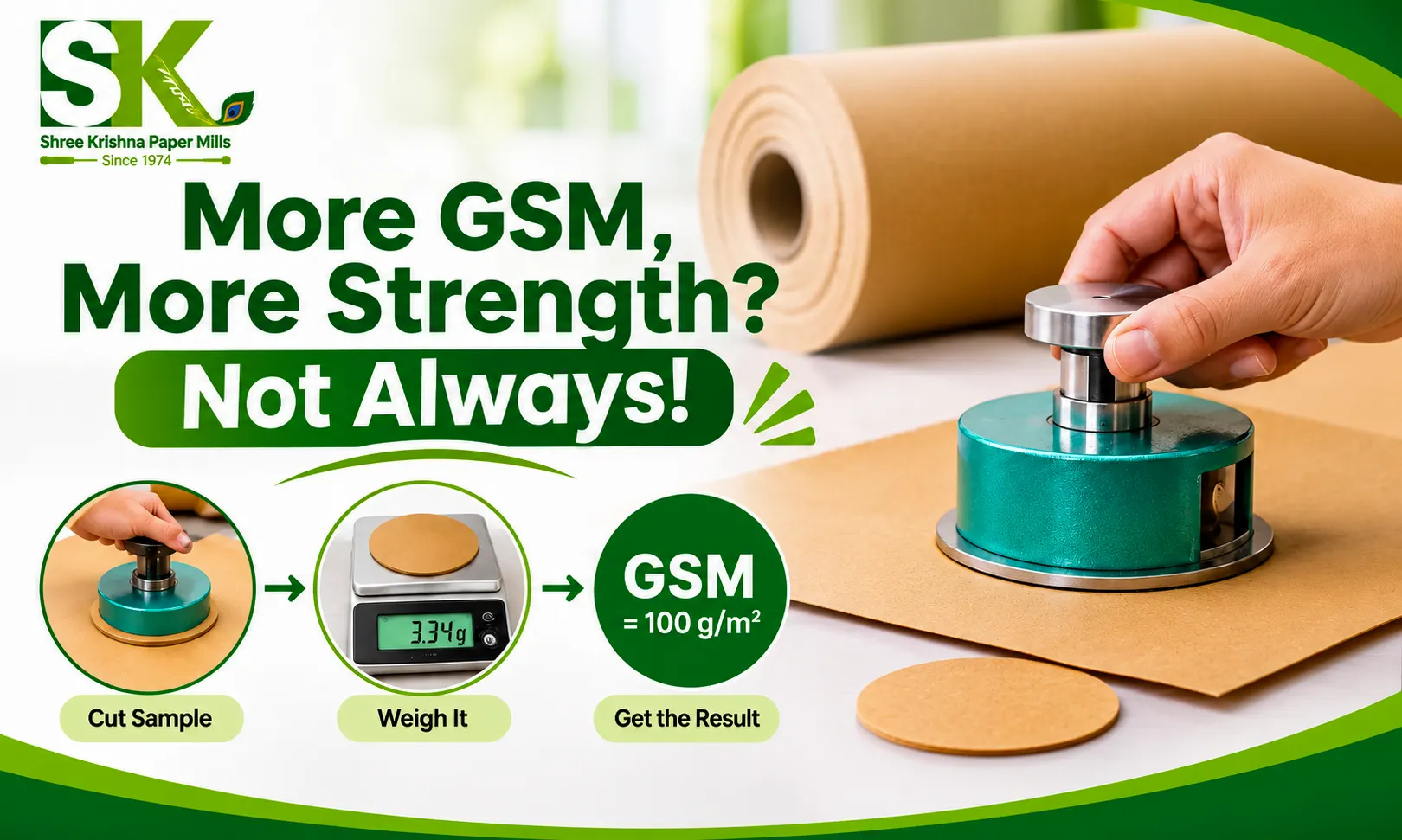
GSM stands for grams per square metre. It measures how much one square metre of paper weighs. For example, if kraft paper has a specification of around 120 GSM, one square metre of that paper weighs around 122 grams. For packaging buyers, GSM is a really useful starting point because it helps identify the grammage and compare different grades.
But it does not directly tell you how strong the paper will be. Higher GSM generally means more paper material by weight per unit area, but it does not automatically mean better packaging performance. 2 kraft papers with the same GSM can behave completely differently because of differences in fibre quality and manufacturing process.
That is the only reason why you should evaluate GSM alongside burst factor, tear resistance and other relevant test results. GSM measures the weight of Kraft paper per square metre. The right GSM depends on the product packaging construction and the shipping conditions.
What GSM is best for kraft paper packaging?
There is no single GSM that works for every packaging requirement. The best GSM for kraft paper packaging depends on whether you are using the paper as an outer liner or inner liner or just wrapping material. For example wrapping lightweight products might not require the same specification as a corrugated box designed for heavy products and warehouse stacking.
Application | Typical GSM Direction | What Matters Most |
Light packaging | Lower GSM | Product weight and handling |
General corrugated boxes | Medium GSM | GSM, BF and flute construction |
Heavy-duty boxes | Higher GSM or stronger paper grade | BF, compression and stacking strength |
Fluting / medium | Application-specific | RCT, cushioning and rigidity |
Outer liner | Higher-performance grade | BF, tear resistance, moisture and stacking |
In Indian packaging applications, kraft liner grades are available across a range of grammages,, including specifications above 80 GSM and up to 225 GSM. The correct choice depends on your board design and the performance required. If you are wondering which GSM kraft paper is best for packaging, then you need to start with this intended use and not just select a number based only on the product category.
GSM versus burst factor: why both matter
One of the most common mistakes that you might make is comparing kraft paper only by GSM. A higher grammage might look like a safer option, but it does not always provide you with the best balance of strength and weight. To understand, you need to look at the burst factor. Burst strength measures how much pressure paper can withstand before it ruptures under a specific test.
The first factor expresses bursting strength in relation to the paper’s gravity.
The exact reporting method and units should be checked against the applicable testing standard and supplier specification. Why does this matter? For example,, you have 2 kraft paper samples with different GSM values. The heavier sample might have a higher total burst strength, but the lighter sample might have a better burst factor. Depending on the package requirement the lighter grade could offer a more efficient strength-to-weight balance.
GSM versus burst factor: why both matter
Product weight is just a useful starting point, but it should not be the only factor in your decision. A lightweight glass product might need more protective packaging as compared to heavier products that are not easily damaged.
Lightweight products: Items like stationery and certain retail products might not need heavy-duty packaging. A light paper grade can just work when your box is approximately designed and the product is not exposed to rough handling. But you need to check whether the package needs to withstand stacking or repeated movement during transportation.
Medium weight products: For everyday packaged goods and general shipping boxes, you need to focus on balancing paper weight with board strength. For this you need to look at GSM and also check the burst factor, liner combination, and float construction.
Heavy products: Heavy products need packaging that can handle greater pressure, especially when boxes are stacked on top of one another. In these situations, the outer liner, inner liner and floating medium need to be selected carefully.
Fragile products: Electronics and delicate products need more than just heavy paper grade. They need packaging that reduces movement and absorbs shocks during handling. Fluid structure and box dimensions influence how well your product is protected. Simply choosing thicker paper might not prevent damage if the product is moving inside the box.
Products requiring long-distance shipping: Products travelling across cities or states might pass through several warehouses and distribution points. They can experience repeated loading and stacking. For these applications, you need to select the paper specification based on actual transportation conditions.
How does corrugated box construction change the GSM requirement?
When selecting kraft paper for corrugated boxes, you need to understand how the different paper layers work together. A corrugated board is not made from a single sheet of kraft paper. It combines flat paper layers called liners with a fluted layer in between. The main components are liner, fluting, and flute type.
Other kraft paper strength properties buyers should check
Depending on the packaging application, other properties can also have a direct impact on how well the finished box performs.
- Burst strength and burst factor: These indicate how well paper resists pressure before rupturing. They are useful when evaluating the performance of a kraft liner.
- Tear resistance: This measures how difficult it is to continue tearing the paper once a tear has started. It matters when cartons are handled frequently or exposed to rough conditions.
- Cobb value: This measures how much water your paper sample absorbs under specific testing conditions. It is worth checking when packaging might be exposed to humidity or moisture.
How to reduce packaging weight without sacrificing protection
Before placing a bulk kraft paper order, you need to check certain factors. You must understand how heavy the product being packed is. Is it fragile or heavy? Is the paper required for outer liner, inner liner or wrapping? What grammage is suitable for the proposed packaging construction? Does the paper meet the required burst strength specification? It is also a good idea to request paper samples and technical specification sheets before confirming a large order. Your packaging team can then evaluate the material against the actual requirements instead of just relying on the quoted GSF.
Conclusion
The best kraft paper GSM is not necessarily the heaviest grade available. It is the grade that gives your packaging and protection what it needs without adding unnecessary material weight. If you are looking to source kraft paper for different packaging applications, SKPMIL can be a point of contact for discussing material requirements and suitable paper specifications. Just share an Internet application and strengthen expectations before finalizing your order.