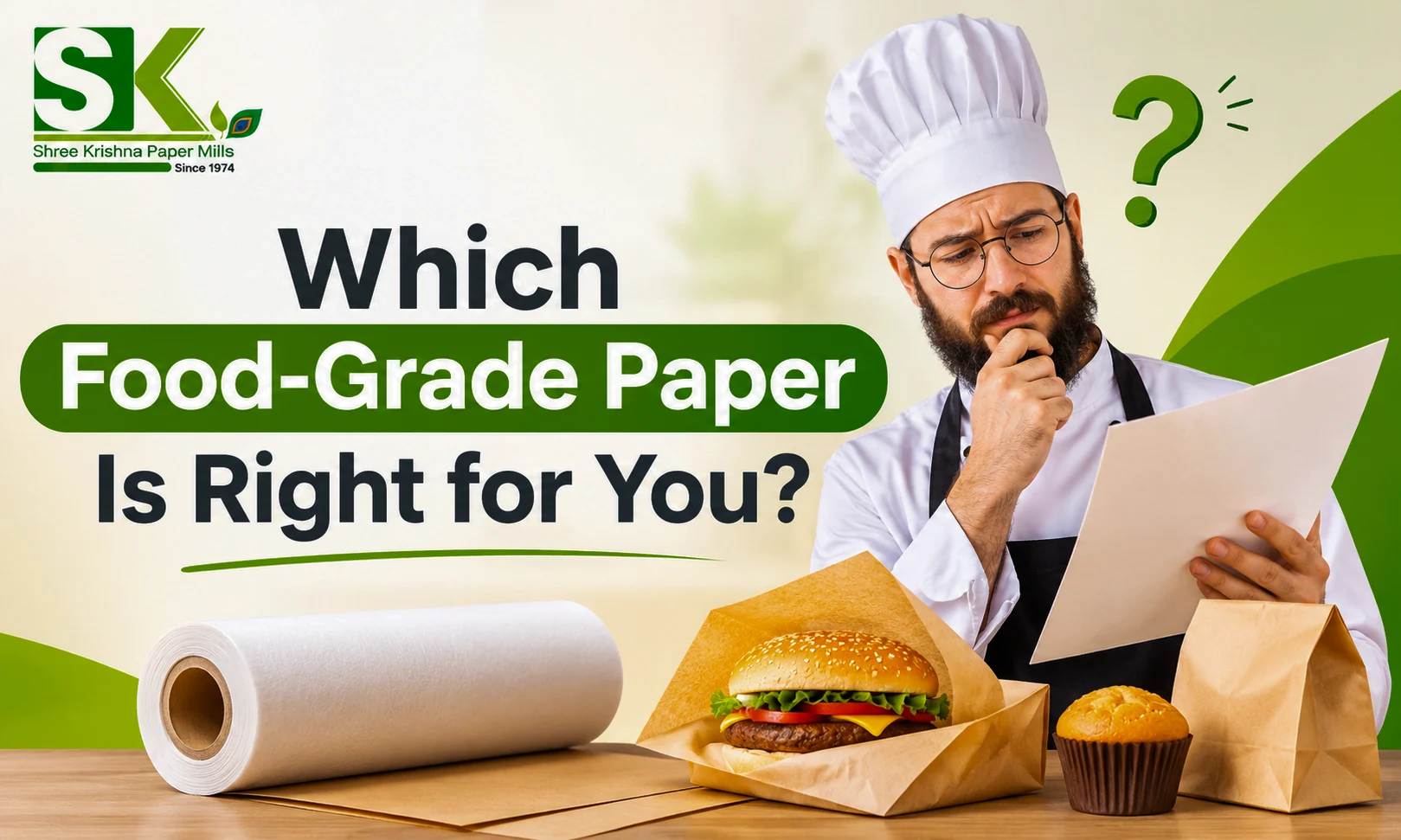
A paper wrapper that works well for biscuits might turn soggy when used for freshly made sandwiches. Similarly, the paper used to pack a burger needs to handle grease, while the paper used inside a bakery oven must withstand heat without sticking to the food. Even though these materials might look really similar, the performance can be different. This is something you need to consider as a food business when selecting packaging materials. The paper is not just there to hold the product. It comes into contact with food, deals with different temperatures and sometimes remains wrapped around the products for hours.
That is the only reason why buying food-grade paper requires more thought than just comparing prices or choosing a particular GSM. You need to know what the paper is made for, whether it is suitable for your food product, and how it will perform during actual use. For a bakery, restaurant or food manufacturer, the right choice can help you avoid common problems like grease stains and moisture damage.
What is food grade paper?
Food grade paper is paper manufactured and tested in food packaging. It must meet the applicable food contact safety requirements for its intended application and should not transfer harmful substances to food or affect the taste or smell. You can find it in everyday food packaging. Bakeries use it to wrap cookies and pastries while restaurants use it for takeaway orders and food manufacturers use paper based materials to package different products.
But there is an important distinction between paper that looks suitable for packaging and paper that has actually been approved or tested for food contact. For example a regular brown kraft paper bag might be perfect for carrying groceries but if you want to place freshly baked bread directly inside it you need to confirm that the paper is suitable for direct contact. The same applies to printed wrappers and coated papers.
Food Grade vs Food Safe vs Food Contact Paper
Term | What it means |
Food grade paper | Paper that meets the relevant safety requirements for its intended food-contact application. |
Food safe paper | A commonly used term for paper considered safe for the specific food packaging purpose. |
Food contact paper | Paper specifically intended to touch food directly or indirectly during packaging, storage, or serving. |
Types of food grade paper for food packaging
There is no single paper grade that works for every food product. A bakery making cookies has different requirements from a restaurant selling fried snacks or manufactured packaging for dried food.
Grease proof paper
If you have handled a takeaway burger, you know exactly how quickly oil can travel through an ordinary paper wrapper. The same problems occur with fried chicken and pastries. Greaseproof paper is designed to resist penetration. It helps keep oil from spreading through paper making the food easier to hold and the packaging less messy. For takeaway outlets, it is especially useful during busy hours when food is prepared and handed over quickly. The paper needs to hold its unique shape and remain reasonably clean. For a closer look at its packaging applications, see our guide to greaseproof paper packaging
Baking And parchment paper
In a commercial bakery paper used for baking has a very different job from paper used to wrap finished products. It needs to withstand oven temperatures and release baked products easily and avoid sticking to the bottom of cookies and other items. Parchment paper is also used for this purpose. Its nonstick surface makes it easier to remove baked products from trays and also helps reduce the need for additional grease or oil. If you are purchasing parchment paper for commercial baking you need to check its maximum temperature rating.
Kraft Paper
Kraft Paper is commonly used by bakeries, cafes and grocery stores. Its natural brown look makes it easy to recognize but its popularity is not just about how it looks. It offers useful strength and can be converted into bags wrappers and other packaging formats. For example if you are selling bread rolls or dry cookies food grade kraft paper for bags and wrapping might be suitable. It is also used for secondary packaging where the paper does not directly touch the food.
Coated and barrier paper
Some food products can quickly damage ordinary paper packaging. If you are packing a takeaway meal containing gravy or a food item with sauce coated or barrier paper can offer additional protection. The paper has a coating or functional barrier layer designed to reduce the movement of grease moisture or liquids. The exact performance depends on the coating material and the construction of the packaging. You can find these papers in take away containers or paper cups.
Vegetable parchment paper
Vegetable parchment paper is another specialty option used in food packaging. It is treated to improve the resistance to grease and moisture making it useful for certain products that need more protection than just ordinary wrapping paper provides. You can use it for wrapping butter rich bakery products and other fatty foods depending on the grade. Although vegetable parchment and baking parchment are sometimes discussed together they should not automatically be treated as the same product.
How to choose the right food grade paper?
This is exactly where many purchasing decisions go wrong. You can select paper sometimes based on GSM or price without considering how it will behave once it comes into contact with food. A better approach is to start with our actual packaging requirement.
Identify the type of food you're packaging
You can start with the product itself. Is it dry, oily or moist? This information has determined which paper properties you need. For example a biscuit manufacturer might prioritize paper strength and protection from external moisture. A takeaway restaurant selling fried snacks will be more concerned about grease resistance. Also you need to consider whether the food contains butter sauces or other ingredients that might interact with the packaging. It is also useful to share actual product samples or detailed product information with your paper supplier.
Evaluate grease and moisture resistance
Grease and moisture are 2 of the most common reasons food packaging paper fails during use. Just think about packing freshly fried chips in paper that absorbs oil within a few minutes. The wrapper might become stained and difficult to handle. Moisture requires separate consideration. A sandwich or bakery product might release moisture during storage which can affect the strength of the paper. When comparing food-grade paper for food packaging, you need to ask about grease resistance for oily food products and water resistance for moisture exposure.
Check heat and temperature requirements
Temperature is especially important for bakeries and restaurants. Paper used to line an oven tray must withstand considerably different conditions from a wrapper used for a freshly prepared sandwich. If you need heat resistant food packaging paper you need to ask the supplier for maximum recommended operating temperature and whether it is suitable for direct food contact under those conditions. Also you need to consider the complete packaging open structure. Coated paper might have a different temperature limit from uncoated paper of similar thickness.
Understand gsm and paper strength
Gsm stands for grams per square meter. It indicates the weight of the paper and is one of the specifications that you need to compare. But a higher GSM does not automatically mean better packaging performance. Apart from GSM you also need to consider thickness and stiffness besides folding performance and surface finish.
Consider contact time and packaging conditions
A paper liner used to serve snacks immediately has a different drop from packaging designed to hold paper for several days. Contact time matters because your food remains in contact with the packaging for a specific time. During that time moisture temperature and other conditions might also affect how the material performs. You also need to think about how the product will be stored and transported. Will it be kept at room temperature? Will it be refrigerated? These details can influence the type of paper and barrier properties you need.
Suit grade paper requirements in india
If you are buying food packaging paper in India, compliance should be a part of the purchasing discussion from the very beginning. The food safety and standard authority of India has established requirements for materials that come into contact with food. These are covered under the food safety and standards regulations 2018 along with subsequent amendments.
Contact materials must be suitable for intended use
Paper and paper board used for food contact must meet the applicable requirements under Indian food packaging regulations. The material should be suitable for the type of food and intended application.
Paper quality and physical condition matter
The physical condition of the paper also deserves attention. Food contact paper and paperboard should meet the applicable quality requirements like expectations around uniformity and freedom from defects. When inspecting samples you need to look for Uneven thickness or formation besides cuts or visible damage.
Understanding the applicable Indian standards
Packaging regulations refer to specific Indian standards for different paper and paper board materials. The relevant standard depends on the material and application.
Ask for testing and compliance documents
This is one question you should never hesitate to ask your supplier. Can you provide the relevant food contact test reports and compliance documents for this paper grade? Under the FSSAI packaging regulations, food business operators must obtain a certificate of conformity from a credible laboratory for packaging materials that directly contact food or are likely to do so.
Food grade paper for different food packaging applications
The same paper grade might not work across every product line even if the food items belong to the same industry. For example if you sell dry cookies or cream filled pastries each product has its own packaging requirements.
Bakery and confectionery
Bakery products can be surprisingly difficult to package because of different textures and ingredients. A dry cookie might need simple food contact wrapping, while a butter-rich croissant can leave grease marks on ordinary paper. Cream-filled pastries might require attention to moisture and direct food contact suitability.
Fast food and takeaway
Fast food packaging has to deal with way more than just food itself. There is often heat, moisture and a certain amount of handling involved. A burger wrapper should resist grease while a takeaway box needs enough strength to hold the food without collapsing.
Oily and greasy foods
Indian food packaging often needs to deal with oil. If the paper absorbs too much oil it can become really weak and leaves stains on the outside. It is the only reason why ordinary paper might not be the right choice. A suitable grease proof paper or tested barrier paper is generally more appropriate.
Dry food products
Products like biscuits and rice snacks have different requirements from freshly prepared food. Food grade craft paper and suitable paper based packaging can work well for many of these applications. But moisture protection becomes important when products need to remain fresh for a long time. Depending on the shelf life requirement a suitable barrier layer or separate inner packaging might be required.
Hot food packaging
Hot food brings challenges to temperature and also steam. For example when freshly cooked food is cooked immediately, steam can collect inside the container. If the paper cannot handle moisture it might just soften and lose the strength. For these applications you need to consider the foods serving temperature expected holding time and whether the paper will be used for direct food contact.
What to Check Before Buying Food Grade Paper
When buying Food packaging paper the most useful question is not simply which grade is available? It is will this paper perform properly with food you actually sell. A bakery packaging butter pastries or a restaurant wrapping fried snacks will all have different requirements. Choosing paper based on these requirements helps avoid unnecessary packaging problems and gives you better control over product quality.
Frequently Asked Questions (FAQs)
Q1: What is food grade paper?
Q2: Food grade paper is paper manufactured and even tested to meet the applicable requirements for intent Ed food contact application.
Q3: Which paper is best for food packaging?
The best paper depends on what you are packaging. Greaseproof paper works well for many oily foods; parchment paper is commonly used for baking, and coated paper provides additional barrier properties when needed.
Q4: Is grease proof paper food grade?
Grease proof paper can be food grade provided and meets the relevant food contact safety requirements. But grease resistance alone does not establish food safety.