Why recycled paper is becoming a serious industry in India
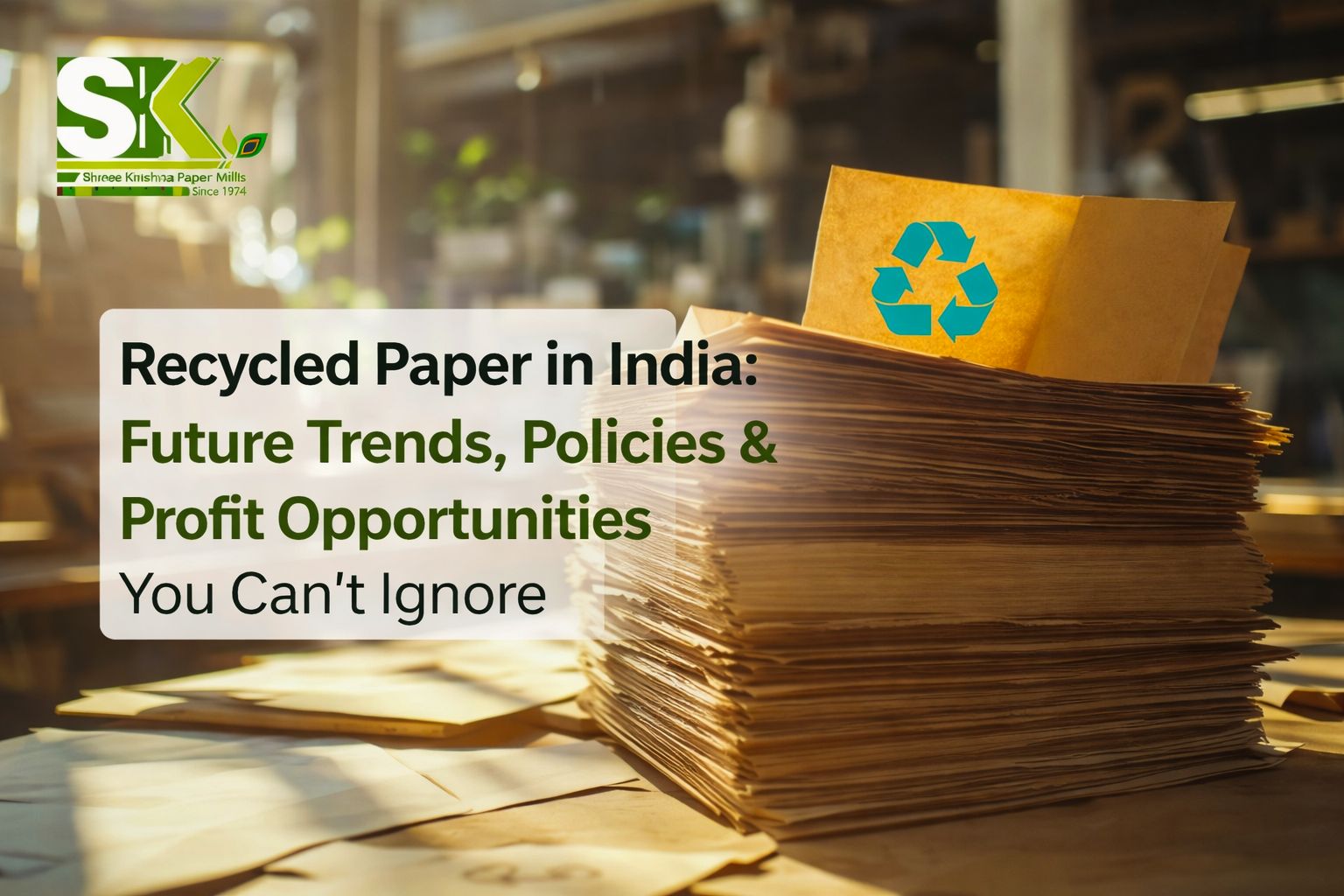
Recycled paper is not an industry anymore, which was a minor part in India’s industrial scenario; it has emerged as one of the main sectors of industrialisation. The reasons for this are many, including environmental concerns and changes in consumer behaviour due to regulatory measures. As India’s economy grows, the demand for packaging materials also increases, especially for FMCG products, food delivery systems, and e-commerce platforms.
The trend of shopping online has contributed greatly towards an increase in demand for packaging materials such as corrugated boxes and paper. Recycled paper is one of the most common choices for raw material because it is economical. Apart from that, it is also good for the environment. Given the issue of deforestation issue and plastic pollution is rising these days, recycled paper is an excellent and smart choice. In an attempt to shift towards sustainable growth, India is now drifting from regular virgin pulp towards recycled paper. This drastic change has not only eased pressure on the environment but also given an opportunity to reuse waste paper.
Recycled paper manufacturers in India: Where the industry stands today
The Indian industry of manufacturers of recycled paper is characterised by fragmentation but continues to develop. It includes a variety of small-, medium-, and large-scale companies that play their own roles in meeting demand for recycled paper products.
Small-scale companies operate locally and supply local industries with such products as kraft paper. Medium-scale manufacturing companies feature better-organised production and are oriented to regional markets, whereas large-scale firms possess integrated plants equipped with modern machinery used for the production of recycled paper products.
The Indian manufacturing sector of recycled paper can be described as fragmented, but it is still growing. There are various types of small, medium, and large-scale organisations that perform different functions to meet the needs for recycled paper products.
Small-scale firms are local and cater to local industries through the provision of items like kraft paper. The production process in medium manufacturing firms is more structured, while they target regional markets. Large-scale firms have well-integrated plants with advanced machinery used for making recycled paper products.
How recycled paper is actually made in Indian factories. This process involves collecting waste paper from houses, offices, retail establishments, industries, etc. The major hurdle in this process is the poor quality and separation of the collected waste paper.
After gathering the waste paper, it is sorted to get rid of any contaminants, including plastics, metals, and other waste products. The waste paper is fed into machines that blend it with water to create pulp. The pulp is later cleaned to get rid of any ink particles, adhesives, or dirt particles.
Deinking is essential, particularly for making better-quality paper. Deinking can be done either through chemicals or by flotation. The next process is refining. This process involves improving fibre binding and strengthening.
Once refined, the pulp is formed into sheets by spreading it on screens. This process is followed by pressing and drying the sheets on hot rollers. Eventually, the paper is rolled and cut into the desired sizes.
The problem faced by India in the real world is that of inconsistency in the quality of raw materials. Due to the non-standardisation of waste paper collection methods, inconsistencies arise in terms of the input quality, thereby affecting the output quality.
What’s pushing recycled paper manufacturers in India to grow faster
There are several potent forces that are catalysing the growth of recycled paper producers in India. The first major one includes the rapid rise of e-commerce. With hundreds of thousands of packages being delivered each day, there is an immense increase in demand for boxes made of corrugated packaging paper, which is advantageous for recycled paper producers.
The second factor includes government policies to minimise the use of plastics. Single-use plastics are increasingly being banned in favour of alternative solutions, such as paper packaging.
Yet another factor is the use of corporate sustainability objectives. In most cases, many companies are adopting ESG policies, where the use of recyclable materials is part of such practices. As a result, there has been an increase in the acquisition of recycled paper by major corporations. The last factor is related to cost optimization in relation to raw materials used. Recycled paper is not only economical but sustainable as well.
Government policies and regulations are shaping the industry
The role that government policies are playing in determining the future prospects of the manufacturing of recycled papers in India cannot be overlooked. The initiative taken by the government of India in reducing the usage of plastics has considerably increased the demand for paper as an alternative. The regulations of EPR made it obligatory for manufacturers to deal with the entire life cycle of their products.
The pollution norms for paper mills have also tightened. The manufacturers are expected to utilise cleaner technology, conserve water, and minimise energy use. Although this may increase their costs, it will improve efficiency and productivity.
The states are providing incentives to industries that recycle products, such as subsidies, tax relief, and quick clearance. This policy is attracting investments in the manufacture of recycled papers.
Market opportunities that are opening up right now
There are numerous possibilities in the recycled paper market within India. The most lucrative area is the rising demand for kraft paper and corrugated boxes, spurred by logistics, retail, and e-commerce industries.
Furthermore, there is potential for exports. Indian recycled paper makers are increasingly exporting their products to foreign nations, especially those that require eco-friendly packaging materials.
The second important area for investment is that of manufacturing enterprises. Small and medium-sized enterprises can be formed by entrepreneurs due to the presence of low entry barriers for setting up units. Such units will target local and regional markets.
A second opportunity that arises in the current environment is that of Tier-2 and Tier-3 cities. With supply chains going outside major metropolitan centres, there is an increasing need for packaging material in these locations.
Challenges the industry still struggles with
Although there is ample scope for growth, there are several problems that remain constant in the recycled paper industry of India. The foremost among these is the erratic supply of waste paper, owing to which the process of collecting waste paper is inefficient and uncertain. Price instability in raw materials also poses a problem. Given that the prices of waste paper are market-dependent, this problem remains consistent.
The problems of energy usage and water usage are still important issues. The production process of paper consumes considerable amounts of both resources, and it is necessary to manage them effectively.
Another problem to address is that of quality control. Given the variability in raw materials used, it might prove challenging to provide uniformly high-quality recycled paper due to its inconsistency.
Future of recycled paper manufacturing in India
Recycling paper production is likely to have a bright future ahead in India because of some revolutionary developments that are expected to take place in the coming days. One such development would be the use of fully automated recycling plants.
Another development that would take place in the recycling paper production industry would be the use of a circular economy model.
It is anticipated that urban waste management will get better, resulting in efficient waste paper collection and segregation. This trend is bound to benefit the recycling industry in resolving the problem of raw materials.
Moreover, the packaging industry will keep driving the growth on a long-term basis. With changing consumption patterns and increasing focus on sustainability, recycled paper will be used extensively for packaging.
India also has great potential to become an Asian centre for recycled papers. The right strategies coupled with proper investment and infrastructure, are all needed to make India a global player in paper manufacturing.
The Role of Quality and Innovation
As the recycled paper industry becomes more organised, quality is becoming just as important as production capacity. Buyers increasingly expect consistent GSM, strength, moisture, surface quality, and performance across different batches.
Innovation in recycling, fibre processing, resource efficiency, and paper development can help manufacturers meet these expectations while supporting more sustainable production practices.
SKPMIL and the Recycled Paper Industry in India
SKPMIL is contributing to India’s evolving paper manufacturing landscape by focusing on quality, responsible manufacturing, and paper solutions for different industrial and packaging requirements.
As demand for sustainable paper continues to develop, manufacturers that combine consistent quality, efficient production, innovation, and reliable supply will be better positioned to support the changing needs of businesses.
Conclusion
The production of recycled paper in India is moving from being an unorganised business activity to a highly organised industry. Increased demand for packaging, government regulations, and other factors continue to fuel this growth.
An activity which was once referred to as a side industry is now set to become a mainstay of India’s industrialisation efforts.
The potential benefits are immense, but equally immense are the difficulties, making innovative thinking a must.
As this industry matures, those producers that take the time to invest in quality and innovation are destined to lead the way. SKPMIL is one of the names contributing to the evolving recycled paper manufacturing space in India.
Frequently Asked Questions (FAQs)
Q1. How is recycled paper made?
Ans: Recycled paper is made by collecting, sorting, cleaning, and repulping used paper before forming it into new paper.
Q2. What is recycled paper made from?
Ans: Recycled paper is made from recovered paper such as newspapers, office paper, magazines, cardboard, and other suitable paper waste.
Q3. Can recycled paper be recycled again?
Ans: Yes, paper can generally be recycled several times, although its fibres become shorter and weaker with each recycling cycle.
Q4. Can you recycle shredded paper?
Ans: Yes, shredded paper can generally be recycled, although local recycling guidelines may determine how it should be collected and processed.
Q5. What are the benefits of recycled paper?
Ans: Recycled paper helps reduce the need for virgin fibres and makes productive use of recovered paper waste.
Q6. What is the difference between recycled paper and virgin paper?
Ans: Recycled paper uses recovered fibres, while virgin paper is made from newly sourced fibres.
Q7. Who are the recycled paper manufacturers in India?
Ans: India has several recycled paper manufacturers supplying paper for printing, packaging, and industrial applications.