Today, India is experiencing a tremendous transition from plastic-based packaging to eco-friendly packaging solutions due to the increased awareness among businesses and consumers. Increasing plastic waste pollution in India and government regulations are compelling businesses to switch to eco-friendly packaging solutions in the country. Today, the need to use eco-friendly packaging solutions is not an option; it has become a necessity.
What Is Sustainable Packaging?
Sustainable packaging can be defined as packaging solutions that are environmentally friendly and have less effect on the environment during their life cycle, starting from material procurement to disposing of packaging materials. In India, sustainable packaging solutions include using less plastic, reducing carbon emissions, and increasing recyclable packaging materials.
On a fundamental level, sustainability in packaging has been based on three general tenets: reduce, reuse, and recycle. This implies fewer resources going into raw materials, use of renewable or recyclable materials in resources, or designing for reusing or recycling in the waste management system in India.
Eco-friendly Packing Solutions in India
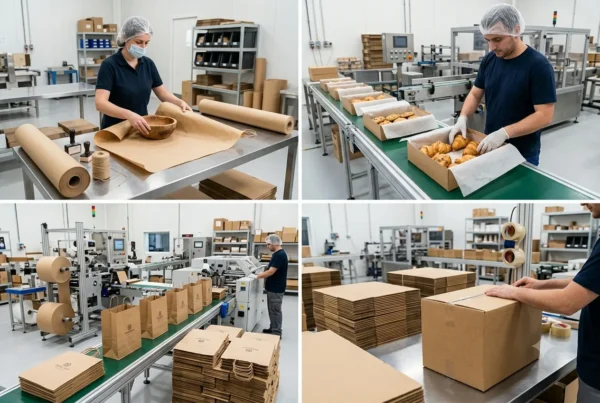
India has a variety of eco-friendly packaging options that can be aptly used in a variety of industries like food, retail, logistics, and e-commerce.
Sustainable Packaging Solution | Description | Typical Use |
Paper Bags | Fully recyclable and biodegradable | Retail stores, grocery shops |
Corrugated Boxes | Strong, reusable, and recyclable | eCommerce, shipping, logistics |
Greaseproof Paper | Oil-resistant, food-safe packaging | Bakeries, QSRs, food outlets |
Kraft Paper | Durable and eco-friendly | Industrial and bulk packaging |
The green packaging systems in India are very much accepted because they are affordable and accessible, and meet environmental standards.
Benefits of Sustainable Packaging
Why Sustainable Packaging Matters – Main Advantages
- Environmental Protection: Eco-friendly packaging decreases plastic waste, the burden on landfills, and marine litter. Paper and biodegradable packaging are biodegradable and help India fulfill its environmental objectives.
- Long-Term Cost Efficiency: Even with a slight rise in initial expense, eco-friendly solutions for packaging result in a long-term decrease in spending due to recycling, reuse, and decreased regulations.
- Improved Brand Image: Eco-friendly packaging products work in favor of brands when they wish to establish a positive image with environmentally conscious consumers.
- Regulation Compliance: Being Sustainable packaging helps in adhering to the rules and regulations of the plastic ban and ensures the business is not penalized.
- Enhancing Customer Loyalty: Consumers favour brands with a strong sense of sustainability evident in them. Packaging also has a role in creating this impression among them.
- Encourages a Circular Economy: Recycling, or more specifically, recyclable & reusable packaging, promotes a circular economy.
Regulating Landscape in India
In India, government rules play an important role in encouraging businesses to move toward sustainable packaging. With growing concerns about plastic waste and pollution, several policies have been introduced to reduce plastic use and promote recyclable and eco-friendly packaging materials. These regulations are helping businesses shift toward safer and more responsible packaging choices.
Key Government Policies Supporting Sustainable Packaging in India
India has introduced a number of policies to control plastic waste and support the use of sustainable packaging materials. Some of the most important policies are explained below.
Plastic Waste Management Rules, 2016 (Amended 2022)
The Plastic Waste Management Rules, 2016, which were later updated in 2022, were introduced to improve how plastic waste is handled across the country. These rules restrict the use of several types of single-use plastics and encourage businesses to switch to recyclable and environmentally safer materials.
Under these rules, companies are expected to reduce plastic usage and improve waste collection and recycling practices. The updates made in 2022 made these rules stricter and added more responsibilities for manufacturers and brand owners to follow proper waste management systems.
Extended Producer Responsibility (EPR)
Extended Producer Responsibility, commonly known as EPR, is an important rule that makes producers responsible for the packaging waste created from their products. This means manufacturers, importers, and brand owners must take steps to collect and recycle the packaging they introduce into the market.
EPR encourages companies to use packaging materials that are easier to recycle and manage. It also supports better coordination between businesses and recycling systems, helping to reduce overall environmental impact.
Single-Use Plastic Ban (2022)
In 2022, India introduced a ban on several single-use plastic items to control plastic pollution. This ban covers items such as plastic cutlery, straws, stirrers, and certain packaging materials that are difficult to recycle.
Because of this ban, many businesses have started looking for alternative materials such as paper bags, kraft paper, corrugated boxes, and greaseproof paper. This shift is helping industries move toward more sustainable packaging solutions.
Role of Government Authorities in Implementation
These policies are introduced and managed by authorities such as the Ministry of Environment, Forest and Climate Change, which handles environmental rules in India. Monitoring and enforcement are supported by the Central Pollution Control Board, which oversees waste management standards across the country.
These government efforts have played an important role in encouraging businesses to adopt sustainable packaging solutions. Companies that use recyclable and eco-friendly materials are generally better prepared to meet regulations and continue operating smoothly.
How Companies Can Transition to Sustainable Packaging
Step 1: Packaging Audit
Begin with an analysis of current packaging materials, volumes, and waste generated. A packaging audit helps pinpoint exactly where plastic use can be reduced or replaced with sustainable alternatives.
Step 2: Choose Sustainable Materials
Choose environment-friendly packaging options like paper bags, kraft paper, or greaseproof paper, depending on the product requirements. The material to be used should strike a balance among strength, safety, and sustainability.
Step 3: Engage with Sustainable Packaging Suppliers
Work with experienced suppliers who understand Indian regulations and material performance. Consultation with suppliers will ensure proper packaging design and standards for compliance.
Step 4: Prototype and Test Packaging
Before full-scale rollout, also test packaging for durability and shelf life, and safety of transport. Testing prevents damage or leaks, or customer dissatisfaction.
Step 5: Roll Out and Collect Feedback
Engage in gradual sustainable packaging, collecting customer and logistics partner feedback. Continuous improvement helps optimize packaging performance along with costs.
Future Trends in Sustainable Packaging in India
The Indian sustainable packaging market is rapidly developing with innovation and technology. A major trend relates to the development of biodegradable and water-based coatings that replace plastic laminations. These coatings maintain strength while improving recyclability.
The other trend that is growing is compostable packaging materials, especially for food applications. In addition to this, companies increasingly adopt circular economy models wherein packaging waste is collected, recycled, and reused within the same supply chain.
Conclusion
Eco-friendly packaging solutions in India are no longer considered a fashion statement; they are a need for the future. With stringent regulations rising by the day and consumers turning towards eco-friendly products, adopting eco-friendly packaging solutions in India can prove to be very helpful for all business organizations. They can choose to opt for various eco-friendly alternatives like paper bags, carton boxes, greaseproof papers, and kraft papers.
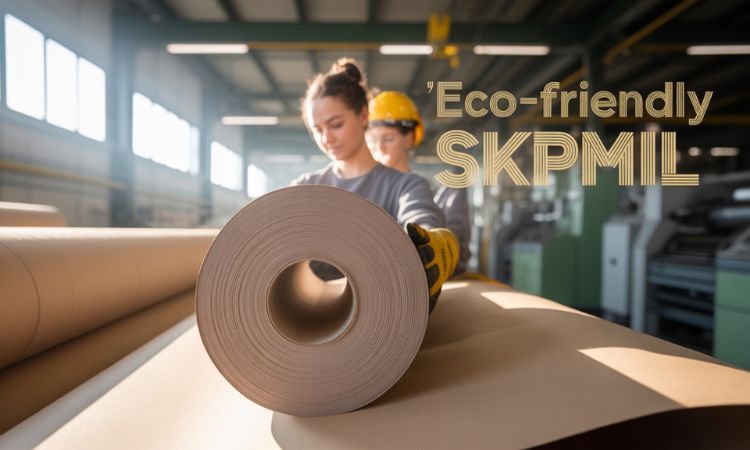
If you are in search of trusted and quality sustainable packaging solutions, as per requirements in Indian markets, Shree Krishna Paper Mills(SKPMIL) provides an array of eco-friendly packaging solutions. Get in touch with SKPMIL to know about tailored packaging solutions that can help in achieving your sustainability goals.
Frequently Asked Questions
Q1 What is Extended Producer Responsibility?
Ans: EPR is a regulation that holds producers responsible for collecting, recycling, and processing packaging waste that is produced by their products in India.
Q2 Are eco-packaging systems more costly than plastic?
Ans: At first, there might be costs involved, but sustainable packaging systems have long-term benefits in terms of reuse, recycling, and even complying with government standards.
Q3 Is Paper Packaging Recyclable in India?
Ans: Yes, paper packaging like corrugated cartons, kraft paper, and paper bags can be easily recycled through the waste management system in India.